

|
| Search | Car Forums | Gallery | Articles | Helper | Air Dried Fresh Beef Dog Food | IgorSushko.com | Corporate |
|
|||||||
| Engineering/ Technical Ask technical questions about cars. Do you know how a car engine works? |
 |
 Show Printable Version | Show Printable Version |  Subscribe to this Thread
|
|
|
Thread Tools |
|
#1
 11-10-2005, 07:42 PM
|
|||
|
|||
|
big block vs. small block
whats teh difference between a big block and a small block. or what classifys an engine as being a big block? the engine size?

|
|
#2
11-10-2005, 07:59 PM
|
|||
|
|||
|
Re: big block vs. small block
well, the biggest difference is the dimensions of most big blocks compared to small blocks. the overall larger size allows more cubic inch displacement. weight is a drawback with a big block as well as they generally do not turn up rpms as quickly as small blocks... but all that can be aided with the use of aluminum in strategic locations
|
|
#3
11-10-2005, 08:04 PM
|
||||
|
||||
|
Re: big block vs. small block
Its entirely different depending on who you talk to.
Basically, most V8 engine families are broken into different families. The difference between small block and big block is usually a different casting. Sometimes parts interchange between them, and sometimes they don't. In the case of Chevy, the small block came in displacements of 265 up to 400 from the factory. The big blocks came from 366 to 454 from the factory. What classifies a small block in this case is that most of the block castings were similar if not the same. Chevy varied the displacement by playing with different bore size and crank stroke. With some exceptions, all small block parts interchange. If you buy an aftermarket intake for a small block chevy, it will fit any of them from the first 265 to the last 400. When you step to big block chevy, its the same thing among that family. Parts interchange between them, but not between small and big. In the case of Oldsmobile, its a different story. There really is no big block/small block clear line. The small block and big block only differ in deck height and journal diameter. Heads will physically bolt up between small and big block but intakes are wider on the big block due to the taller deck. In the case of Pontiac, there is no small and big. They all share the same physical size and basic casting. There are different main journal sizes, but everything Pontiac offered between 301 and 455 was basically the same architecture. In the case of Ford there are several small blocks and it gets confusing. The 289/302 family are Windsor small blocks with a short deck. The 351 is a Windsor small block with a taller deck. There is also the Cleveland small block, usually a 351 or 400. The big blocks took many shapes and sizes ranging from 390 to 460, and there were even more confusing things thrown in. The short story is that its a descriptive term meant to classify engine families. I know that if I get a big block Chevy in a car, its going to accept parts from a certain parts bin, weigh a certain amount, and have a certain set of strong points and shortcomings... but since actual engine size is determined by other factors, it does not always mean I will get more size or power.
__________________
Dragging people kicking and screaming into the enlightenment.
|
|
#4
11-10-2005, 08:13 PM
|
||||
|
||||
|
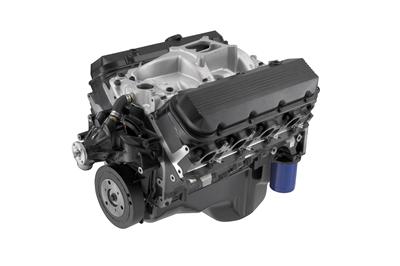
For example. Here is a picture of a Big Block Chevy; Notice the evenly spaced exhaust ports on the side, the spacing of the valve cover bolts, etc.
 Now here's a small block chevy minus a few parts: Notice the closer spacing of the center exhaust ports and the valve cover bolts going right through the center of the valve covers. Not all are exactly like this, but for the sake of comparison... 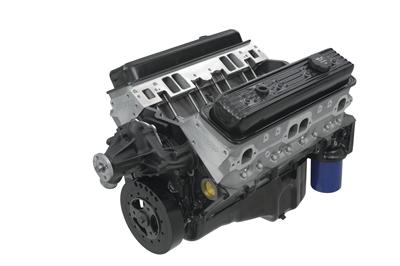 Chevy made a basic casting back in the day of each block. Through the years with some minor manipulation of the molds they can alter some internal specs, but for the most part, all small block cams, heads, intakes, oil pans, valvetrains, and internals will fit all small blocks. The big block is the same story, but it was a completely different casting to start with.
__________________
Dragging people kicking and screaming into the enlightenment.
|
|
#5
11-10-2005, 08:16 PM
|
|||
|
|||
|
Re: big block vs. small block
im way too lazy to type out all that lol
hell i dont even use caps or punctuations
|
|
#6
11-11-2005, 05:58 PM
|
|||
|
|||
|
ok so the biggest difference between small and big blocks is the casting they come in? is one usually more powerful/faster than the other?
|
|
#8
11-11-2005, 07:46 PM
|
||||
|
||||
|
Re: big block vs. small block
Quote:
But, on the other hand a big block chevy can be stretched to 502 or 540 on a good stock block or as much as 750+ with a specialty aftermarket block... and a very deep pocket. Given the size potentials, typically yes a big block is more powerful than a small block, especially when you consider aftermarket performance parts. In some cases (like for instance an Olds small block 403 compared to an Olds big block 455) where the big block is a little tougher to make power. The 403 uses a huge bore and short stroke. The 455 uses a smaller bore and very long stroke. The small bore size limits valve size and therefore breathing so its a bit tougher to make power in the 455. The 455 is a fine engine, but I would prefer the 403 in this case. Its 52 cubic inches smaller, but with aftermarket parts it makes more usable power in my opinion.
__________________
Dragging people kicking and screaming into the enlightenment.
|
|
|
POST REPLY TO THIS THREAD |
 |
|
|












