

|
| Search | Car Forums | Gallery | Articles | Helper | Air Dried Fresh Beef Dog Food | IgorSushko.com | Corporate |
|
|||||||
| Car Modeling Share your passion for car modeling here! Includes sub-forum for "in progress" and "completed" vehicles. |
 |
 Show Printable Version | Show Printable Version |  Subscribe to this Thread
|
|
|
Thread Tools |
|
#1
 10-20-2009, 09:38 PM
|
|||
|
|||
|
Painting tips
Whats up guys. It seems that everytime I paint a model, no matter how much care I take comes out rough. Here are some samples. . . .
   I use etch it with 1000 grit. Primer with tamiya. Light sand primer with 1000 grit. I spray from an arms distance with tamiya paint. I heat the paint and wait bout 10min between coats. I use a large cardboard box and place the model inside when painting. I even wet down all the walls of the box. No matter what I do, they almost always come out with this. I tried wetsanding but its impossible to get it all. Any suggestions? 
|
|
#2
10-20-2009, 09:47 PM
|
||||
|
||||
|
Re: Painting tips
1000 really isn't enough for the paint to be smooth. Also spraying at arm's length sounds too much. It should be about 6-8 inches away from the model. Invest in some polishing compounds (Tamiya/Meguiar's etc) and maybe some Micromesh polishing pads as they go up from 1500 to 12000 grit to get the paint really smooth. Check out the tutorials section as there's a great one there about painting and polishing.
__________________

|
|
#3
10-20-2009, 10:35 PM
|
||||
|
||||
|
Re: Painting tips
I agree, it sounds like you are spraying too far away. With your next model try painting a little closer. 8-12" works for me. Also you want to lay down a few mist coats, and then one or two wetter (thicker) coats. Becareful because you might spray more than enough and develop drips.
Your orange peel isn't bad, you still can get a nice glossy surface. You just have to wetsand and polish the body up like kev stated. Trial and error, and good luck.
__________________
In Progress 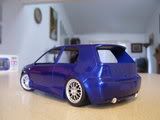 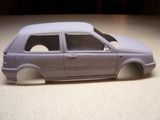 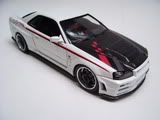 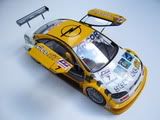
|
|
#4
10-21-2009, 12:38 AM
|
||||
|
||||
|
Re: Painting tips
In addition to the steps you are already taking, watch this Tamiya demonstration video to get an idea of the closness and speed you want to aim for. Arms length is WAY to far IMHO.
Also check out Alex's painting tutorials on Italianhorses.net where he gives great advice on prepping, painting, polishing, waxing etc.. Other than speed and closeness, tempreature etc., one of the most important factors is remembering to fight that evil inclination to try and cover the body all in one session - a recipe for disaster when using spray cans IMHO.
__________________
Guideline for happy modeling: Practice on scrap. Always try something new. Less is more. "I have a plan so cunning, you could put a tail on it and call it a weasel" - Edmund Blackadder
|
|
#5
10-21-2009, 02:27 AM
|
|||
|
|||
|
Re: Painting tips
1000 grit is good to even rough spots, but does not produce a smooth surface. When you have a rough paint, you should reach grade 2000 at least (800->1000->1200->1500->2000) before using polishing compound. If the surface is smooth already you may need 3200 or higher in some spots then either wax or polish (again, depending on the surface quality you have). Needless to say you will never get shiny finish is the paint is not saturated. Too few paint layers will never create the desired finish.
|
|
#7
10-21-2009, 10:04 AM
|
|||
|
|||
|
Re: Painting tips
Looks like too much paint, sprayed from too far away. It partially dried before it reached the surface, causing that pebbly effect.
Spray closer - seven inches - and move the nozzle quickly. Too little paint is better than too much, so keep that nozzle moving. With Tamiya TS, the time between coats is not a worry, unless there are defects that need to be sanded. I always wait at least 8 -12 hours before sanding or polishing TS. You're going to be sanding and polishing the surface, and that means a risk of burn-through. So you need to apply enough paint, especially to "high spots" and edges. But don't try to do it all in one coat. Several light coats are much better than one or two thick ones. If you've sprayed correctly, you'll have little or no orange peel, and 2000 grit will be the only grit you'll need. Wet-sand with the 2000 until you've removed every bit of texture you can. As you sand, keep drying the area so you can see clearly whether any texture remains. Once you've flattened the surface, use Tamiya Coarse to start the polishing process. (IMO, TC is much more efficient than those ultra-fine, multi-stage polishing pads. You could actually go straight from spraying to TC, but wet-sanding saves a lot of time.) As you're compounding, frequently check the surface with an Optivisor or magnifying glass. If you see left-over paint texture, it's okay to go back and hit the area again with 2000 grit. Once you've gotten a soft overall gloss, polish it off with Tamiya Fine. If you want even more gloss, go to Tamiya Finish. Ddms
|
|
#8
10-21-2009, 01:50 PM
|
||||
|
||||
|
Re: Painting tips
Looking at the pictures you provided, in particular the red Honda you need to lay the paint on a little wetter and also spray nearer to the model. By wetter I don't mean a big, thick, heavy coat. It takes practice but you should be able to spray a nice wet even coat without runs or sags and without laying the paint on too thickly. You need to reach the 'magic' moment where the paint is wet enough to be glossy and smooth but not so wet that it runs. If you can reach that moment you will have very little need for sanding and will just need some light compound and polishing.
__________________
Steve Noble
|
|
#9
10-21-2009, 02:30 PM
|
|||
|
|||
|
Re: Painting tips
Steve is right; ideally, the last coat ought to be wet enough so there's no orange peel and you can go directly to polish. But that takes some practice; when you spray wet coats, there's a greater risk of sags and runs.
For most models, the time to paint, wet-sand and polish the car body is while everything is still in pieces, before anything is attached to anything else. The cab, hood and deck - anything that's "body color" - should be painted, sanded and polished as separate parts. Instead of struggling to fix those cars in the pictures, it might be a better use of your time to start fresh with a new kit. If you're like most of us, you have several that are just begging to be built. Ddms
|
|
#10
10-21-2009, 06:41 PM
|
|||
|
|||
|
Re: Painting tips
Thanks alot for the advise. I really appreciate it. I am currently doing a spoon Integra Type R and really don't want to jack it up. I am going to try closer and hopefully it works out. Really appreciate it guys.
|
|
#11
10-22-2009, 01:33 PM
|
||||
|
||||
|
Re: Painting tips
Quote:
__________________
Steve Noble
|
|
#12
10-22-2009, 02:51 PM
|
|||
|
|||
|
Re: Painting tips
Thank alot guys. I also have one last question as well. I have tamiya "fine" primer, and regular tamiya primer. What's the difference? How does it affect my paint?
|
|
#13
10-22-2009, 02:58 PM
|
||||
|
||||
|
Re: Painting tips
Hi!
The regular primer is a little thicker (covers more scratches from sanding). The fine is, obviously then, a little thinner. If you have to do alot of work on a body or part and re-prime often. It´s good to use the fine primer as you will get less buildup that can ruin surface detail. What primer you use does´nt affect the outcome of your paintjob that much as long as it´s compatible with the paint you´re putting over it. The important thing is to have a very smooth and even surface BEFORE applying the paint and in between layers. Wetsanding the primer lightly with #2000 wet´n´dry sandpaper will get you a nice and smooth surface for the paint. Then spray about 3 thin layers of paint and two thicker "wetter" layers. With some practice you will get good paintjobs in notime. Also you can try to heat your cans a bit before spraying, this will get the pressure up in the can and generate a better finish and flow. Put the can in some warm (NOT very hot) for a minute or two. Then spray... Hope this helps! Emil
|
|
#14
10-22-2009, 03:18 PM
|
|||
|
|||
|
Re: Painting tips
oh ok. I usually sand the body after primer just not wetsanding. I'll try that then. I always heat up the bottles too. works out.
You guys are great, thanks for the great responses.
|
|
#15
10-22-2009, 03:22 PM
|
||||
|
||||
|
Re: Painting tips
Quote:
Just remember to clean the model afterwards under the tap with an old toothbrush or similar and some detergent to get rid of all the sanding residue. Cheers! Emil
|
|
|
POST REPLY TO THIS THREAD |
 |
|
|





