

|
| Search | Car Forums | Gallery | Articles | Helper | Air Dried Fresh Beef Dog Food | IgorSushko.com | Corporate |
|
|||||||
| Car Modeling Share your passion for car modeling here! Includes sub-forum for "in progress" and "completed" vehicles. |
 |
 Show Printable Version | Show Printable Version |  Subscribe to this Thread
|
|
|
Thread Tools |
|
#1
 11-28-2008, 03:49 PM
|
|||
|
|||
|
Laquer based Acrylics Vs. Water based Acrylics
After some pretty intense researching both on AF and Google i'm still trying to find an answer.
I've seen in Scale Auto and actual pictures of builds of guys using craft store paints (water based) acrylics successfully on their cars. What I have learned is:
What I'm trying to figure out is:
Also, I did a Google search trying to find some information with no luck. Is anyone using any of these mediums and with what level of success? 
|
|
#2
11-29-2008, 11:42 AM
|
||||
|
||||
|
Re: Laquer based Acrylics Vs. Water based Acrylics
Let's see, tarting from the top...
Skip the craft store acrylics. Just because they're the cheapest option doesn't mean they're a good option. Same with Future. Hobby aqueous acrylics (Tamiya, Gunze, MM Acryl) however are very good products. Hobby paints have similar temperature tolerance as plastic you'll paint it on. However aqueous paints will never be as hard or durable as lacquer- so handle surfaces painted with them with a bit more care. Thin aqueous acrylics with the manufacturer recommended thinner. After spraying, clean up with window cleaner, household cleaner/degreaser, etc. Lacquer thinner will completely clean your airbrush of any residues left from spraying aqueous paints. When I paint bodies, by the time I'm done spraying lacquer primer, there is no aqueous paint left over- several cycles of cleaning and spraying primer nicely takes care of that. Aqueous paints can't be thinned quite as thin as lacquers. This is because the solvent they're based on is water, and water just doesn't evaporate as quickly as lacquer thinner. So if you reduce aqueous paint too much (or spray too heavily), the wet paint will pool and run.It just takes a light touch and a bit of patience to determine how much paint you can apply at once. Aqueous paint may also require a slightly higher air pressure in your airbrush, as they will be slightly more viscous than properly reduced lacquer. I certainly use both hobby aqueous acrylic and automotive acrylic lacquer for my builds.
__________________
PHOTOBUCKET SUCKS
|
|
#3
11-29-2008, 01:50 PM
|
|||
|
|||
|
Re: Laquer based Acrylics Vs. Water based Acrylics
Fantastic response and very detailed answer as usual MPWR! It is much appreciated! I certainly don't want to use the cheap craft paint if it won't deliver the desired result I'm looking for, though, I have been reading that many guys are switching over to more environmentally friendly acrylics and though it's not the entire reason I'd like to switch, it is definetly a concern of mine.
I also like to experiment with various paint mediums and have a variety of color choices on hand. I will most definetly do some more research on Hobby aqueous acrylics to learn more about them before I start using them! can you direct me to some photos of paint jobs that either you've done or someone you know that uses these paints so I might be able to see some examples of what they look like when complete? I appreciate the throuough explanation of how to work with these paints!
|
|
#4
11-29-2008, 02:12 PM
|
||||
|
||||
|
Re: Laquer based Acrylics Vs. Water based Acrylics
I much prefer the acrylic lacquers for body painting and use these almost exclusively now.However the aqueous type are my first choice for most of my non body painting, Tamiya being my preferred brand.For any brush painting I use Tamiya enamels or Vallejo acrylics as these give the best finish and without brush strokes.I think for body painting though the acrylic lacquers are the best.They are just easier to apply, dry very fast and once cleared are very durable to both handling and polishing.
__________________
Steve Noble
|
|
#5
11-29-2008, 02:51 PM
|
||||
|
||||
|
Re: Laquer based Acrylics Vs. Water based Acrylics
Aqueous acrylics are certainly more environmentally friendly than lacquers. They also are therefore less poisonous for you. Of course hobby aqueous paints share this with craft aqueous paints. The hobby varieties are just better formulated for the type of painting we tend to do in modeling.
I use craft acrylics occasionally also, but I don't find they perform particularly well for modeling. 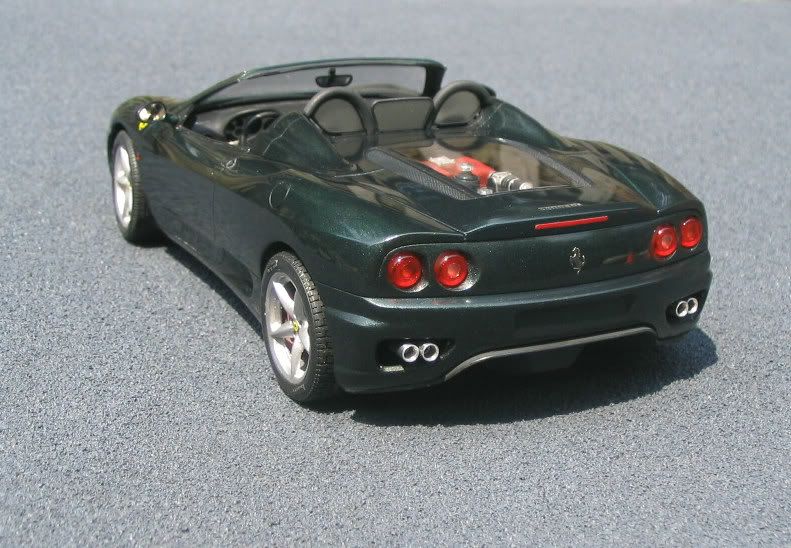 The base this model is sitting on is a piece of 2'x2' plywood, covered with model railroad ballast. I painted it with craft acrylic- it was cheap, easy to use, and did the trick nicely. It probably would have taken me several bottles to do the same with Tamiya acrylic. So it does have it's place- I just don't paint models with it. Quote:
The 360 above was painted with lacquer for the body color only. Everything else- wheels, taillights, seats, engine, etc, was done with aqueous acrylic. This is the engine from my F50. Everything on it is either Tamiya acrylic, decal film, or bare aluminum. 
__________________
PHOTOBUCKET SUCKS
|
|
#6
11-29-2008, 06:58 PM
|
|||
|
|||
|
Re: Laquer based Acrylics Vs. Water based Acrylics
Great visual examples and unbelievably realistic too! I particular like the color variances on the engine! The railroad ballast makes a really cool display base, further adding to the realistic look!
Thanks to both of you for the great advice! (and pictures)
|
|
#7
11-30-2008, 06:47 AM
|
||||
|
||||
|
Re: Laquer based Acrylics Vs. Water based Acrylics
Thought I would offer a few examples.
Benetton B192 engine painted with Tamiya Acrylics 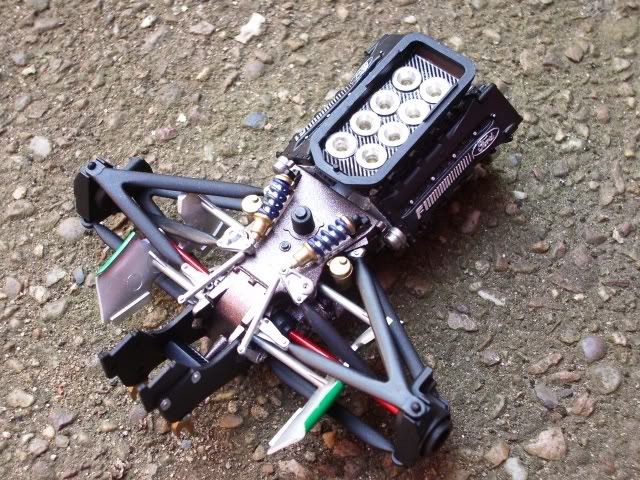 McLaren MP4/5b mixture of Tamiya, Vallejo and Alclad paints, carbon decal 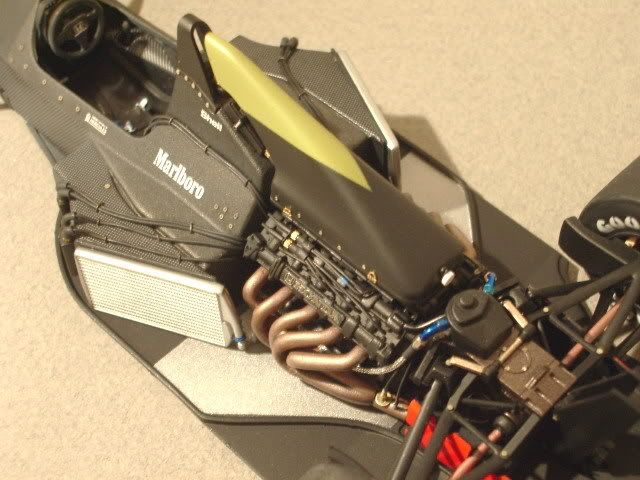 McLaren MP4/7 Body work Zero Lacquers and Zero 2K clear 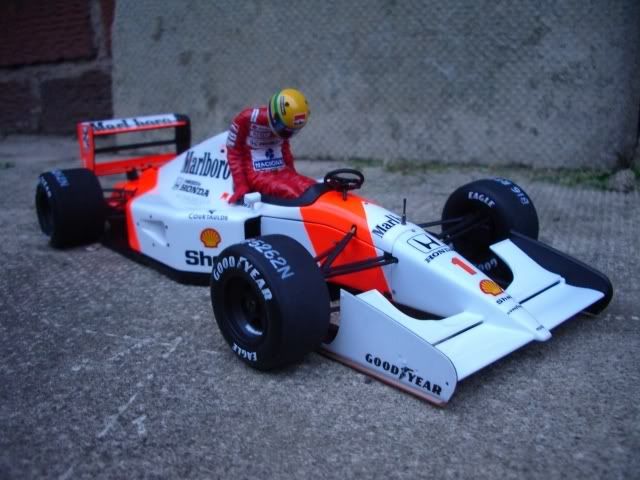 Suzuki Hayabusa Zero Candy paints and Zero 2K for the bodywork, everything else Tamiya acrylics and Alclad. 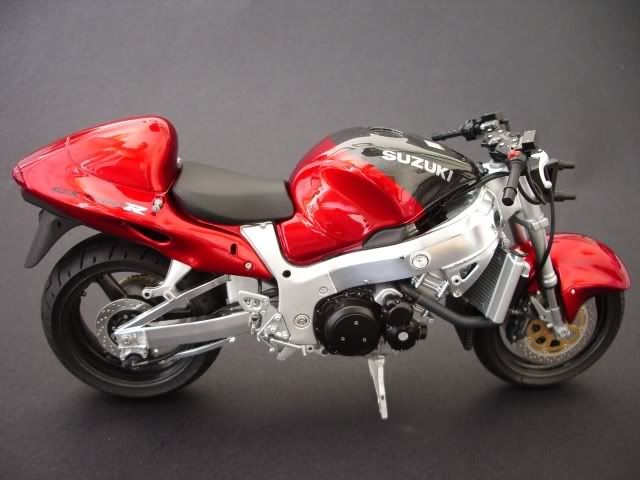 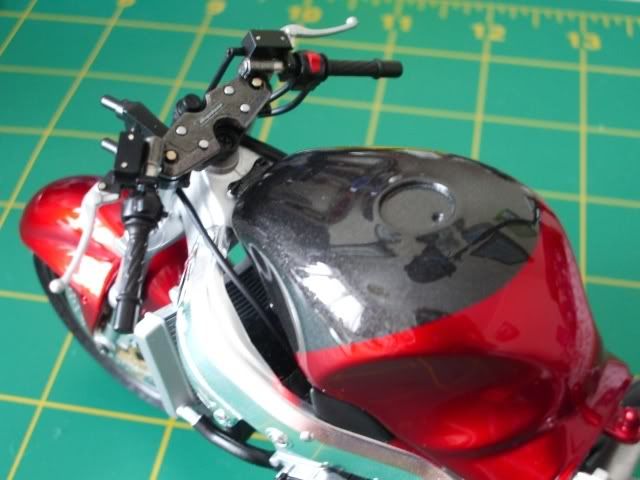 Benetton B192 Body work mixture of Zero, Tamiya TS and Finishers, all the engine and chassis details Tamiya and Vallejo acrylics 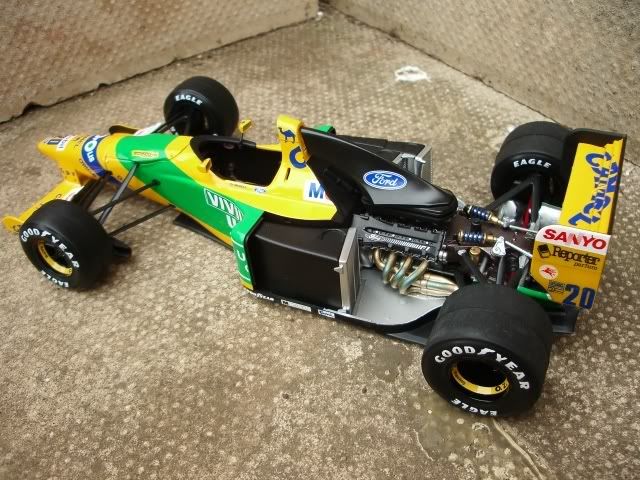 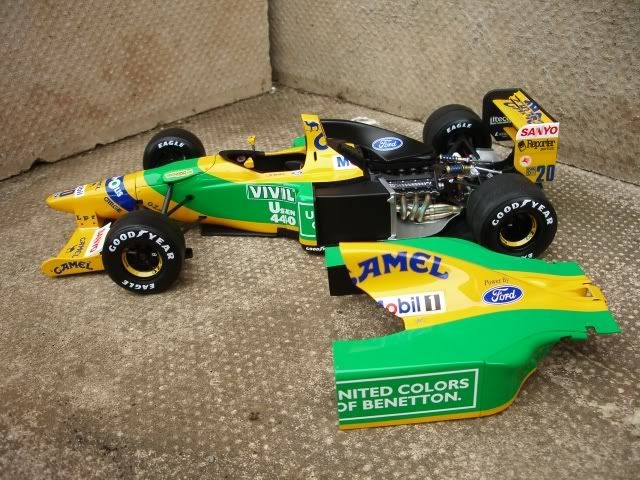
__________________
Steve Noble
|
|
#8
11-30-2008, 11:28 PM
|
|||
|
|||
|
Re: Laquer based Acrylics Vs. Water based Acrylics
As usual, everything MPWR (did I get it right this time?) says is true.
Quote:
For body color, I prefer them over water-based acrylics because of their flexibility and durability. For example, if you have a local problem - like a fisheye - with one of those paints, you can sand and repaint just that area, and the repair will be invisible after polishing. Unlike with the water-based acrylics, the new paint just melts into the old. For the same reason, there's no need to scuff up one coat before applying the next. As somebody else has mentioned, the lacquers produce a harder finish. That means they will take a higher polish. Nice. I've been using mainly water-based acrylics for engine and chassis parts, but I'm planning to experiment with brushed Alclad and sprayed and brushed MM Metalizers on my next model. Ddms
|
|
|
POST REPLY TO THIS THREAD |
 |
|
|






