
|
| Search | Car Forums | Gallery | Articles | Helper | Air Dried Beef Dog Food | IgorSushko.com | Corporate |
|
#2
 08-29-2008, 10:01 AM
|
|||
|
|||
|
Re: 400 Vs 455
e12,
While it looks better "on paper", the 400 won't "hang" with the bigger Pontiacs. This is not my opinion, but a fact of physics. At any Pontiac "meet", you'll see the differences plainly. Don't get me wrong. I like 400 a LOT. For a revver, you're right, it has better parameters than 455. But torque is "king". Two things the late great Smokey Yunik said about the Pontiac: "Horsepower sells engines, torque moves cars. What are we trying to do?" and "Don't REV it up, GEAR it up!". He was responsible for winningest pair in NASCAR history, in 1962. Joe Weatherly and Fireball Roberts won 31 races between them in Catalinas, engines prepared by Smokey. The "compromise" is the 4" stroke found in 421 and 428. Today, we're lucky enough to have a TON of aftermarket "goodies" available for the old Injun. The most popular combination for a street engine is the Eagle "stroker" 461 (400 block, 4.25" stroke). The 4" stroke is the more popular for most stock-block race engines. The aftermarket blocks have a much larger bore (up to 4.4") and LIKE the 4.25" stroke. I recommend you buy Jim Hand's book "How to Build Max-performance Pontiac V8s" and learn what we're doing with them today. We (I wrote Chapter 2, "Building Your Shortblock") put this book out Summer of '04, and it is far and away, the most current study of the Injun Engine. Bear in mind, it is aimed at STREET engines, not "race" engines. It's an exciting time for us Injun "heads". Horsepower from the new heads and blocks is approaching that of the BBC Pro Stock engines. The nastiest normally-aspirated Pontiac in the world is making about 1,180 HP on gasoline with carbs, at 540 CID. A 2,600 lb. door slammer is going 7.30s. He wiins the Ram N/A races from time to time. That's "heads up" racing against Big Chief and Hemi in cars of similar weight and bulk. He's been No. 1 qualifier several times. His name is Scott Rex. Based on this R&D, it's only a matter of time before a true Pontiac shows up in ProStock again (not since 1978). There are also several blown/alcohol projects getting finished up. One nut case (said with the utmost of affection) in Arizona is running his 399 CID Pontiac on nitro, going mid 6s over 200. It's again, only a matter of time, before Pontiac again takes it's rightful place at the high end of GM performance engines. But I feel ya! I always had 400s in my GTOs, and it usually took a 440 or 454 to beat me. I DID run a 421HO for while. With Ram Air heads (in 1980), I was deep in the 11s in street trim. Angered MANY a Dodge and Chevy... (what's a Ford?) Don't take this wrong. 400 is a GREAT engine. In fact, 400 Pontiac was THE most prolific engine in a muscle car during the era ('cuz they sold more GTOs than any other muscle car). Just use head, not heart, to judge which one makes more usable power. BTW, L-78 was a low-compression "smogger". It can be made to make power, but it's a "shadow" of the Ram Air 400s of the late '60s. We're making 600 HP and 650 lb. ft. with 93 octane for streeters today (without power adders). Things have changed... (:- Jim 
|
|
#3
09-03-2008, 08:16 PM
|
|||
|
|||
 Re: 400 Vs 455
Ultimately a bigger engine is going to win out, but I was thinking more of out of the box stock engines. Modified a 455 is going to beat a 400, but a stock 455 may have trouble (depending on year). By the time the 455 came along smog controls were in and the muscle car era was on the decline, and I don't believe the 455 was given as much treatment by Pontiac as the 400. An exception is the SD 455, but stock Vs stock I would say a RA III/IV has the edge on a '72 455 HO. Back in the day I think of the 455 as something that pushed the big cars (like the GTO) around more happily, leaving the little 400 for the Firebird. The 421 and 428 are great engines, but I regard them as pre smog, so really can't speak of them in the same context as the 455. Mind you, if that's the case I suppose we can only compare a '72 455 HO with a '77 W72 400, i.e. smog Vs smog...that would be a close contest.

|
|
#4
09-04-2008, 10:19 AM
|
|||
|
|||
|
Re: 400 Vs 455
While I understand your sentiment, it IS sentimental. "Pre-smog" would be '64 and older. ALL 400 production engines had to meet emmission standards, at least in California, and "Federal" after '67 ('67 was first year of production).
The first GTO or Firebird equipped with an engine larger than 400 CID was 1970. The '70 455HO was a D-port design (advertised at 10.25:1 compression, the ONLY "high compression" 455), using the 068 cam, making 370 advertised HP and 495 advertised lb. ft. The Ram AIr IV 400 had the same advertised HP, but torque was 435. It (RA IV) was a much more powerful engine at higher revs. Unfortunately, GM forced Pontiac to use those gawd-aweful cast connecting rods, making a GOOD high revver impossible. Ram Air V ("tunnel port") was the shizzle... BUT... None were released in production cars. Too bad... Beginning in '71, rating methods changed, making 455HO yield 335 HP. A '71 T/A was available with this as the ONLY engine option. Same in '72. My '70 Judge Ram Air III car (366 HP 400) would run along side the '71 GTO w/HO, but the T/A would run away and HIDE from the GTO. When they reduced the compression ratio and horsepower ratings of 455, they did the same thing to 400. Don't misunderstand me here. I LOVE the 400 Pontiac. Absolutely the best overall engine of the muscle car "era". But certainly not the most powerful, and unless properly prepared, not the most durable (thank GM politics and Chevy for that). Once properly built, 400 is an excellent all-around engine. We have several customers with them running solid 12 second cars in street trim. Even had a couple go in the 10s with a small "hit" of nitrous. We recommend 400 for most road racing or circle track applications for the ability to rev, AND for the lower amount of low-end "grunt". Coming off a corner is a big deal to those guys, and a high torque engine will tear the tires off at lower speeds. But don't discount the 421/428 combo. VERY effective. Lastly, considering the engine has been out of production since 1978 (those installed in '79 models were "leftovers"), the term "stock" is of little relevance. PAX Jim
|
|
#6
09-11-2008, 08:43 PM
|
|||
|
|||
|
Re: 400 Vs 455
Quote:
 I suppose pre smog came in earlier, but the smog controls pre '71 were pretty minor compared to what came for '71 and later. You could mostly tune your way out of the pre '71 controls by rejetting the carb and playing with the ignition advance angle.
|
|
#7
09-12-2008, 10:05 AM
|
|||
|
|||
|
Re: 400 Vs 455
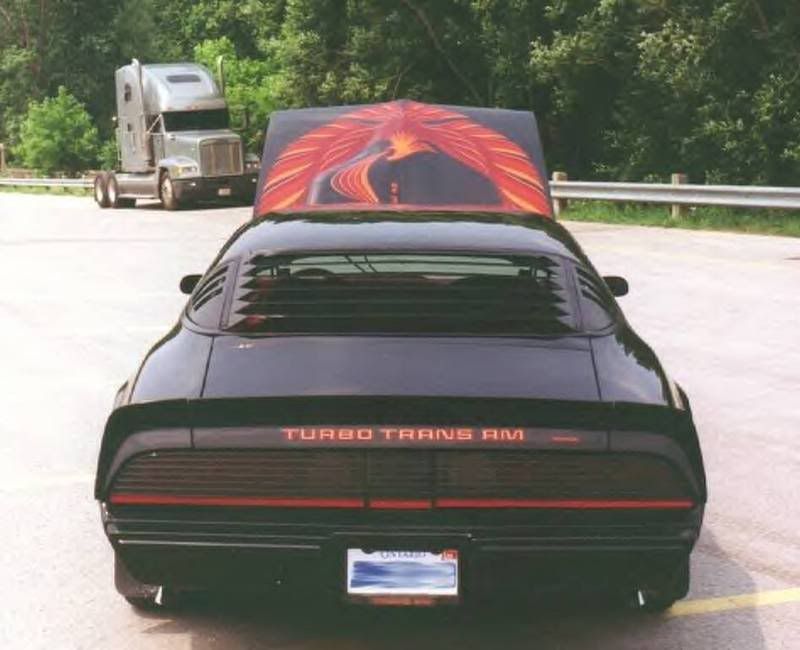
While I understand what you're saying, you've changed from "better" to "seems more like". And the two cars you list as examples were WAY over-rated. A Z/28 with 302 OR a Boss 302 wouldn't TOUCH real muscle cars. "Never send a boy to do a MAN'S job..." They were aimed at a specific class in SCCA racing, that limited engine displacement to 5.0 litres. The mystique surrounding those two models far exceeds their actual performance. Pontiac's entry was 303. While never installed in "production" cars, it was okay, not great, against the little Fords and Chevys. Kinda like the 305 Dodge. It seems even fewer people know about the little Dodge than the little Pontiac. It is nice to know, though, once factory backing left the Ford and Chevy teams in T/A racing in '74, Pontiac FINALLY won in TransAm, with the late Jerry Titus driving the Radial T/A "Tirebird".
I know it's difficult to grasp, but "high performance" comes in many forms. High revvers are fun to drive, make cool noise, etc. But, the downside is they don't live nearly as long, they aren't nearly as efficient at lower speeds, making them poor candidates for street performance, and they tear up driveline parts due to the higher revs when power is applied. Today, we build 461 CID Pontiacs that rev easily to 6,600 and live fine in street applications. We have a couple guys running mid-to-low 10s in the 1/4 mile, on 93 octane gas without power adders, and driving them back and forth to work. Chevy guys HATE us.. (:- We have MANY going solid 11s doing it. In one recent "incident", one of our guys was out cruising in his '69 Firebird (11.40s all week long). It appears stock, idles at about 700 RPM in gear, and gets 13 MPG. One of those new GT500 Mustangs tried to "pick" him. He rolled across the intersection and THEN hit the gas hard, but the Ford "hit it" from the light. When Dan shifted to 2nd, he was beside the Ford and JUMPED about 5 lengths on him at the shift. The poor little Ford gave up right then. The man was pretty upset, having just paid about $60K for the car, and got beat by a 40 year old PUSHROD V8. Not just "beat", STOMPED..! In another case, we built a 452 CID Pontiac (4.350 bore, 3.75 stroke) using an Indian Adventures block. It was running 10.10s around 128 in a 3,400 lb. '70 GTO. It kept "bumping the chip" at 7,200, about 100' from the stripe. We asked around for a higher chip. A small block guy came over and said "You're running a real Pontiac in that car, right?" "Yup." "Well, here's an 8,000 pill. If you can get it through the 1/4 mile without blowin' it up, you can keep it!" The chip is still in the car... It has been 10.03 @ 133 since then. It's all in how you look at it. Jim
|
|
#8
09-19-2008, 08:07 PM
|
|||
|
|||
 Re: 400 Vs 455
Quote:
  Quote:

|
|
#9
09-20-2008, 10:35 AM
|
|||
|
|||
|
Re: 400 Vs 455
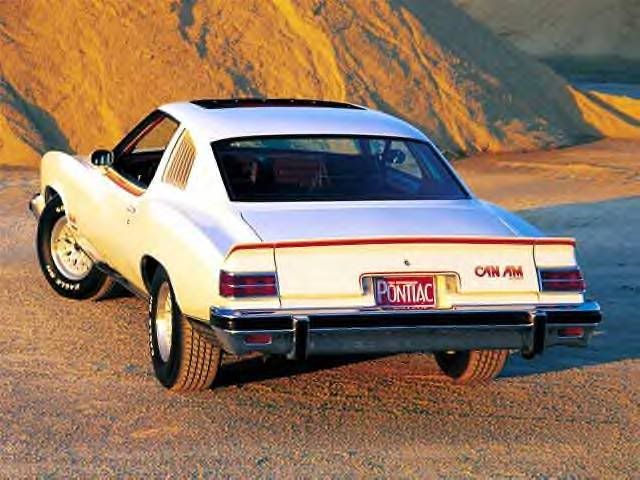
Sorry, dude. I know a couple of guys with CanAms. They can't them into the 14s in the 1/4 mile. The W72 is a smogger engine with no real power, unless MAJOR changes are made. And no, a '72 GTO with a 455 in it will run away and hide from ANY '73-'77 A-body. There IS a 500 lb. difference between them, you know. Still, I really like the looks of the '73 GTO and G/A, and of course, the CanAm is a "modern classic".
Also, the ability to "rev" in modern engine theory has little to do with bore/stroke ratio. We used to think so, but with all the strokers out there today, it has been proven to just not be "so". There are many large-cube Fords and Chevys that rev to 8,500 RPM without problems, even when the stroke is longer than the bore is "wide". Those 408 Fords are incredible... Same is true of the Pontiac. If you can get a pair of heads on it that will breath at a given RPM, it will go there. With all the good parts, and a better understanding of rod/stroke ratio and bearing "speed", we manage to get the long-stroke Pontiacs up there and live just fine. Relax. You're preaching to the chior. I'm just trying to bring you up to date. Jim
|
|
#10
09-26-2008, 08:14 PM
|
|||
|
|||
|
Re: 400 Vs 455
Quote:
|
|
#11
09-27-2008, 02:07 PM
|
|||
|
|||
|
Re: 400 Vs 455
I'm afraid your information regarding the Can AM and the post-'72 400 engines is inaccurate. The ONLY GM V8 rated at 290 "SAE Net" horsepower was the '74 455SD. The '71 and '72 HOs were 335 "net". '73 SD was 310. Even the 454 Chevy was down to 255 by '74. The '77 400s were rated at 190 and 210, depending on what options. The fact is, even in T/A, a '77 was a turd by '70 standards. The 403 was used in T/As, but I've never seen an A-body with one. That's not to say there were none, just not common at all.
This is one of those subjects that can go on forever. Unless you were an automotive technician in a Pontiac dealership in 1977 (I was... "heavy line, front-end, brakes"), you're basing all your information on internet data. We've learned since the advent of the "net", published data is NOT reliable. One of the reasons is that the data migration people are not "car people", and wouldn't know if they were transferring the data inaccurately. We see it every day when we try to get parts from Auto Zone or other keyboard-oriented parts store. We even see this in modern magazines where degreed "journalists" with no REAL automotive background make mistakes and don't realize it. I discontinued my subscription to "High Performance Pontiac" magazine for this reason. They put wrong information under a picture of a GTO (claiming the Ram Air IV engine was rated at 345 HP, when it should have been 370). When I wrote them to point it out and offered my services to help "proof-read" before they made another such blunder, they told me they were the "professonals" (I've been a professional in the field for over 30 years) and I should do better research. Well, since I OWNED a '70 Judge with a 370 horse Ram Air IV engine in it before one of them was born, I decided it was futile. The FIREBIRD's Ram Air IV was rated at 345, NOT GTO. The only difference between the engines was a throttle "limiter" installed ot lower the output for insurance purposes. So, you can go on disputing, but it won't change the facts. I recommend you go to an "all Pontiac" race near you and talk to the guys USING the engines. I also suggest you read as many old magazine "tests" (some are real, some are "staged") as possible, and you will clearly see the serious drop in straight-line performance (horsepower) from 1970 through about 1988, when it started turning back around. And that is not "brand sensitive". Jim
|
|
#12
10-02-2008, 07:02 PM
|
|||
|
|||
 Re: 400 Vs 455
Quote:
|
|
#13
11-02-2008, 10:29 PM
|
|||
|
|||
|
Re: 400 Vs 455
Quote:
You seem to have alot of knowledge about pontiacs. What would you reccomend for my 1967 firebird as far as a engime, tranny rearend combo. I want a street legal car, that is fun to drive, but with a bit of attitude to deal with todays hotrods. Thanks
|
|
#14
11-02-2008, 10:52 PM
|
||||
|
||||
|
Re: 400 Vs 455
Something else to consider on the information for these cars is they were publicly under rated on HP for insurance purposes. So a lot of documents and manuals out there show those inaccurate ratings.

__________________
1999 Grand Am SS 3.4 OHV 
|
|
#15
11-03-2008, 10:34 AM
|
|||
|
|||
|
Re: 400 Vs 455
Chris,
Thanks for the compliment. We've been building Pontiacs for many years. I raced a GTO in the early '70s and heard "You can't make it run, gotta use a Chevy" too many times. Considering I had beat up on most of the SS396s within 50 miles, I had a hard time accepting that attitude. It all depends on your budget and what you consider a "hotrod" today. If you mean the F-bodies, G-bodies and Mustangs and GTOs, you need at least 500 horsepower. If you mean the ricer crowd, 400 will probably be enough. We (CVMS) have a package we sell a lot of, using a 400 block with aftermarket heads, that makes an honest 600 horsepower on 93 octane gas. At 461 CID, it idles around 800 RPM "in gear", with 13" of vacuum. The guys drive them on the street, some on a "daily" basis. They also drive to the track and run mid to low 11s on the tires they drove in on, and "through the pipes". When they load the cooler and jack back into the trunk and start to drive off, it raises a few eyebrows...(:- Small block guys line up to take the dare "Find the nitrous"... We also sell a fair number with iron d-port heads, in the 500-550 HP range. I highly recommend Jim Hand's "How to Build Max-performance Pontiac V8s", published by SA Designs in 2004. This is by far, the most current study of the ol' Injun. Jim's '71 LeMans wagon weighs over 4,000 lbs. and goes 11.50s all week on 93. 3.55 gears and a "tight" torque converter, this is a true street car. Start with a 400 block, though. Don't fall for the instinct that says a 455 block must be better, it is not. If you would like more specifics, either PM or e-mail me. I'm not selling here, but the list of combinations is just too extensive for posting. Jim
|
|
 |
POST REPLY TO THIS THREAD |
 |
|
|


 400 Vs 455