

|
| Search | Car Forums | Gallery | Articles | Helper | Air Dried Fresh Beef Dog Food | IgorSushko.com | Corporate |
|
|||||||
| Car Modeling Share your passion for car modeling here! Includes sub-forum for "in progress" and "completed" vehicles. |
 |
 Show Printable Version | Show Printable Version |  Subscribe to this Thread
|
|
|
Thread Tools |
|
#1
 12-17-2007, 11:37 PM
|
|||
|
|||
|
Why not white primer?
Seems like Alex Kustov usually paints his cars with a two coats of sandable grey primer before applying white primer (non-sandable type, I think, like Tamiya), which he feels is the best undercoat for a red color coat.
I'm sure AK has a good reason for everything he does. So what's the reason for using grey for the early coats? Why not just use sandable white primer from the start? I work in 1/43, and like to keep my paint coats just thick enough to fully cover what's underneath, with no excess. That way I get sharper panel lines and details. But for red and light-colored cars I've been using grey primer, then white, then two or three color coats. Even shooting light coats, all that paint adds up! Couldn't I save a coat or two just by starting with sandable white? What's the point of a non-sandable primer anyway? (If you plan to sand Tamiya white primer, prepare yourself for a long seige. It's tough stuff, not at all like gray sandable primer.) And - related question - who makes a sandable white that works well with plastic and resin? Diddy 
|
|
#2
12-18-2007, 12:57 AM
|
||||
|
||||
|
Re: Q for Alex K - Why not white primer?
Hi, let me make a guess...
alex uses the 'conventional' 2-color primer is because the light grey (be it sandable or not) is the best color to check for defects before moving on. as the white primer (be it sandable or not) is really to lighten up the base for light color application later on. alex is a master of modeling, he wants no mistakes on every build he does... i also have this thought of mixing both grey & white primers to get a lighter primer tone & just to skip 1 primmng step. so far i haven't airbrush this new mixture on my builds yet. i'll post some pic samples for your reference when i do it. as for sandable or non sandable primers...gee, i never heard of primers that can't be sand! how are we supposed to get 100% smooth surface preparation for the wet & dry coats later!? hehe... cheers!  opcorn: opcorn: marc SGP
__________________
I can feel the adredalin, the same adredalin of what it's like... to be a classic ferrari coachbuilder.
|
|
#3
12-18-2007, 06:01 AM
|
||||
|
||||
|
Re: Q for Alex K - Why not white primer?
Please use the Personal Message feature to contact him directly next time please.
__________________
http://public.fotki.com/tonioseven/
|
|
#4
12-18-2007, 06:30 AM
|
|||
|
|||
|
Re: Q for Alex K - Why not white primer?
Quote:
 Didy, as mentioned, grey shows up body defects and imperfections better so they can be corrected. Another thing, white primer doesn't have to be used under all paints, it's only a must when spraying a color which is known to be translucent or effected by the color underneath.
__________________
|
|
#5
12-18-2007, 07:36 AM
|
||||
|
||||
|
Re: Why not white primer?
Non sandable white?
Trust me, even Tamiya fine white primer should be wetsanded smooth. It might be smoother than other primers, but it still has a tooth to it that you can easily see, especially when spraying Tamiya color over. If you took a model primed w/Tamiya white primer, unsanded, and shot color over it, and then took a white plastic body and shot the same color over it w/o primer, the one w/o primer would be glossier and smoother. I go over every primer coat w/3600 grit micromesh to smooth it out. And if I did the color test again vs. raw plastic, the raw plastic part would still look better under the color. The Tamiya standard gray primer covers better than the white, and it's easier to see defects. If I'm doing a fair bit of sanding/bodywork on a model to get it ready for paint, I'll often use gray first. Tamiya paints shrink so much that I can't imagine how much paint one would have to use to obliterate panel lines and details.
__________________
My Fotki Album
|
|
#6
12-18-2007, 07:42 AM
|
||||
|
||||
|
Re: Why not white primer?
Quote:
i don't quite get you. thankx! marc SGP
__________________
I can feel the adredalin, the same adredalin of what it's like... to be a classic ferrari coachbuilder.
|
|
#7
12-18-2007, 09:49 AM
|
||||
|
||||
|
Re: Why not white primer?
Quote:
|
|
#8
12-18-2007, 02:36 PM
|
|||
|
|||
|
Re: Why not white primer?
Quote:
Quote:
White paint, whether it's primer or color coat, does not cover particularly well. The Tamiya Surface Primer is better than color coat, but it still takes a helluva lot to get good coverage. Painting this model has been a struggle: On two occasions, I've gotten all the way to the second color coat, only to realize (after polishing with very gentle Tamiya Coarse) that grey primer was STILL faintly visible. Arrrrgh! In the current attempt, I finally have what appears to be good coverage, but I'm not happy with the softened, partially filled panel lines. It struck me that I'd have been better off to start with a white sandable primer, followed with Tamiya Surface Primer (white) and a color coat or two. At this point I may strip the car and start over - maybe with sandable white primer. So that's what generated my question. Maybe it's only an issue with 1/43 and white Tamiya rattle can paints, but I think model cars generally look more crisp and realistic with thin paint, regardless of scale. Just one thin coat of paint on a 1/43 car is grossly out of scale. Diddy
|
|
#9
12-18-2007, 03:16 PM
|
||||
|
||||
|
Re: Why not white primer?
I can't say I've ever had a problem with the Tamiya white primer being 'sandable' or not 'sandable'.What is the difference between a primer that sands and one that doesn't? I find it sands in exactly the same way as the grey primer and most other primers I have used for that matter.As for the coverage of white paint in general,I would agree that some brands do take quite a lot of paint to get good coverage especially Tamiya.I always find it quite 'thin' and it often takes many light coats to get a nice even coverage and a good gloss.
I don't necessarily agree that you must only use the thinnest layer of paint that you can get away with.Myself I like to put enough coats on so I can polish back if necessary.There's nothing worse than polishing through to the primer layers and ruining a good paint job.I think you would have to put quite a serious number of coats on before you start to fill over panel lines etc.If you are worried that the panel lines will disappear under the paint layers simply scribe them a little deeper before you paint and then they won't be filled in.Recently I've used the Zero Pure White basecoat paint which covers over anything and has none of the 'see through' issues you get with Tamiya TS-26.I doubt very much if I will use the TS-26 anymore now I have seen the benefits of the Zero stuff.
__________________
Steve Noble
|
|
#10
12-18-2007, 03:36 PM
|
||||
|
||||
|
Re: Why not white primer?
Quote:
 I guess I "knew" that but, until I saw you say it in words, I didn't know that I didn't "know" that (if you know WTF I mean   ) )
__________________
Guideline for happy modeling: Practice on scrap. Always try something new. Less is more. "I have a plan so cunning, you could put a tail on it and call it a weasel" - Edmund Blackadder
|
|
#11
12-18-2007, 04:22 PM
|
||||
|
||||
|
Re: Why not white primer?
Quote:
__________________
My Fotki Album
|
|
#12
12-18-2007, 06:09 PM
|
||||
|
||||
|
Re: Why not white primer?
Quote:
Quote:
Quote:
Quote:
In any case, I'd like to avoid the gap-filling, detail-swamping problem by applying only as much paint as is necessary to do the job - properly, of course, with no burn-through and no see-through. Diddy
|
|
#13
12-18-2007, 07:17 PM
|
||||
|
||||
|
Re: Why not white primer?
Way back when I was in the automotive paint business we sold primer, primer/surfacer and sealer. Primer was rarely used as it was a thin coat just used to promote adhesion to a virgin or bare surface. Primer/surfacer was used the most and is what most people reffered to as primer. It is a thicker product that acts as a mild filler that can be sanded smooth for a flat surface to paint. Sealer is just used to seal the primed and sanded surface to provide an even color background and prevent bled through into the top coat.
Now I've really muddied the waters hav'nt I.
|
|
#14
12-18-2007, 10:25 PM
|
||||
|
||||
|
Re: Why not white primer?
Hey Diddy,
Just thought I'd add my thoughts about Krylon. I use two coats of Krylon white primer under bright colors for my cars. I can still see mold lines and potential filling areas well. Krylon is sold at a very good price for the amount you receive. The primer does lay out thick on the car producing a rough surface. But once sanded, it becomes very smooth. Deepening panel lines before primer application would probably work best for this method. Cheers, Rick Here is an example of a Krylon sand down. 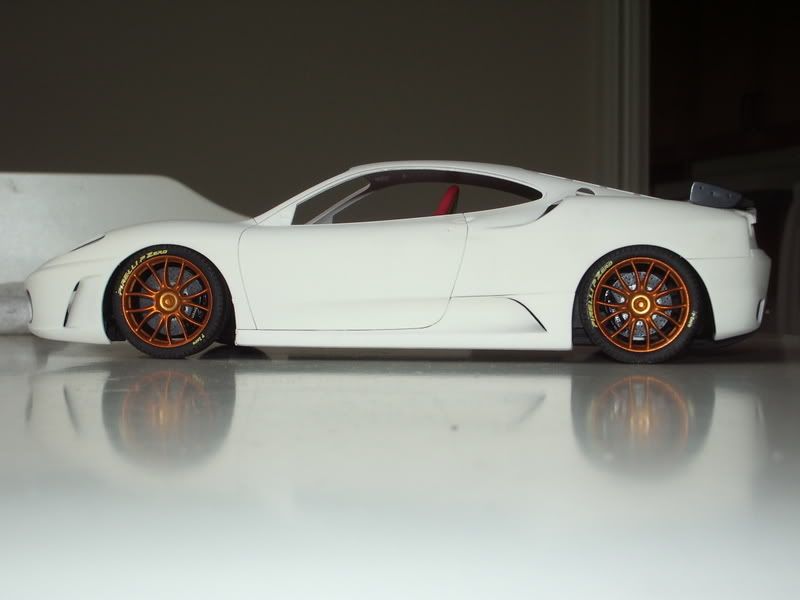 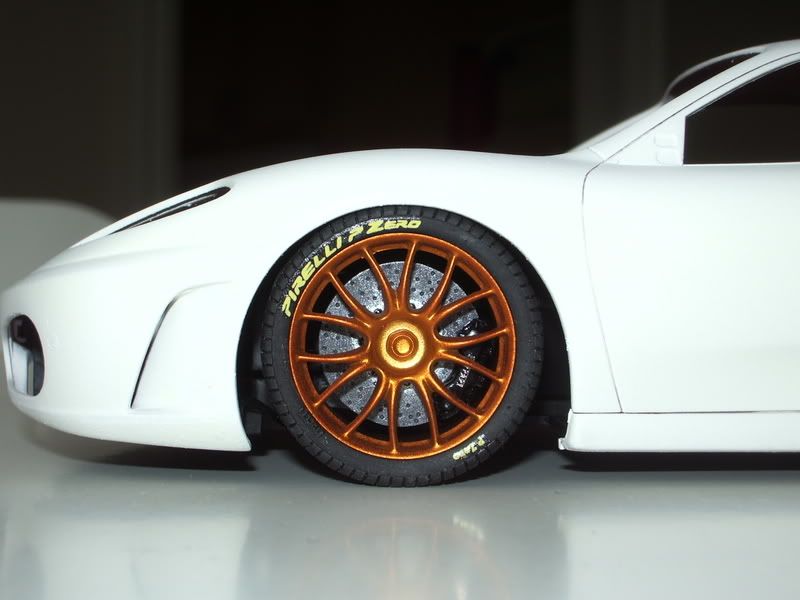
__________________
Current Build: Changing diapers and reading toddlers' books! 
|
|
#15
12-18-2007, 10:44 PM
|
|||
|
|||
|
Re: Why not white primer?
Diddy, since I've been working with 1/43 models from the last two years now, I've found that I had save a lot of work time using Gunze Sngyo products instead the Tamiya ones
First, I shot Mr. Surfacer 500, which is a thicker primer for covering any inperfection and to detect any other mark on the body. Like with any other, if I have to sand, I sand. After this, I airbrush another coat of the 500 Surfacer. If anything is OK, I go to the next step. I airbrush a coat of Mr. surfacer 1000,which is a thinner primer and the best of all, it doesn't need any sanding. It gives you a surface ready for painting. After this, I follow with Mr. Base White 1000. This is like the Mr Surfacer 1000, but, in white. Basically a thinn flat white coat. This is the one I use if I intend to use any light color like silver, or white, if not, I leave it with the light gray Mr. Surfacer 1000 primer. I works for me, I think you can give this a try. My  ! !
|
|
|
POST REPLY TO THIS THREAD |
 |
|
|







