-
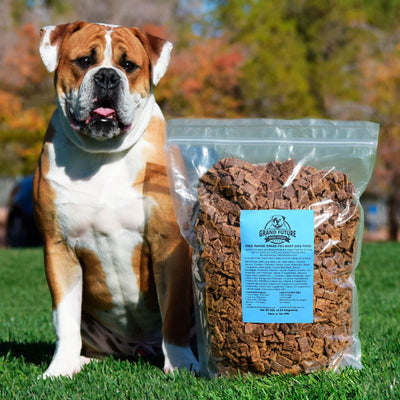
Grand Future Air Dried Fresh Beef Dog Food
Air Dried Dog Food | Fresh Beef

Carnivore Diet for Dogs

Go Back   Automotive Forums Car Chat > Oldsmobile > Intrigue
Register FAQ Community
Reply Show Printable Version Show Printable Version | Subscription Subscribe to this Thread
 
Thread Tools
  #1  
Old 08-11-2007, 10:36 AM
NeoSaiyan7 NeoSaiyan7 is offline
AF Newbie
 
Join Date: Jul 2007
Posts: 12
Thanks: 0
Thanked 0 Times in 0 Posts
Car jolts

When driving on the highway, my 98 3800 starts to jolt and then goes away. I have no clue what the problem could be. Any help, please
Reply With Quote
  #2  
Old 08-11-2007, 12:09 PM
LittleHoov's Avatar
LittleHoov LittleHoov is offline
AF Enthusiast
 
Join Date: Sep 2005
Posts: 1,144
Thanks: 1
Thanked 7 Times in 6 Posts
Send a message via AIM to LittleHoov
Re: Car jolts

Does it do it when you place the engine under high load at low RPM? For example, if your are cruising at 70-75 turning 2000 rpmsish..and you come to a grade in the road and ease into the throttle a bit without raising the RPMS does it start to jolt then?

What happens to the gauges of the vehicle when it jolts? Do they cease to function momentarily?

Other than that it could be a Torque Converter Clutch issue, but lets answer the other two questions first before we get into that.
__________________
2000 Oldsmobile Intrigue 3.5 DOHC V6
Mods: Fenderwell Intake, High-Flow cat, U-bend delete, 12-inch front rotors, GMPP handling kit, 20% tint, Pioneer front and rear speakers, Eclipse HU, cleared corners
1986 Jeep Cherokee 2.8 V6
Reply With Quote
  #3  
Old 08-11-2007, 06:08 PM
aghopkins aghopkins is offline
AF Newbie
 
Join Date: May 2007
Posts: 49
Thanks: 0
Thanked 0 Times in 0 Posts
Re: Car jolts

My car (02 3.5) was doing the exact same thing a few months back. In my case it was the fuel pump. Got it replaced and haven't had it happen again. Hope this helps.
Reply With Quote
  #4  
Old 08-13-2007, 05:37 AM
panzer dragoon panzer dragoon is offline
AF Enthusiast
 
Join Date: Sep 2004
Posts: 731
Thanks: 0
Thanked 4 Times in 4 Posts
Re: Car jolts

Quote:
Originally Posted by LittleHoov
Does it do it when you place the engine under high load at low RPM? For example, if your are cruising at 70-75 turning 2000 rpmsish..and you come to a grade in the road and ease into the throttle a bit without raising the RPMS does it start to jolt then?

What happens to the gauges of the vehicle when it jolts? Do they cease to function momentarily?

Other than that it could be a Torque Converter Clutch issue, but lets answer the other two questions first before we get into that.
=watch the engine RPMs during the jolt. =Is this an engine problem (a slight rpm stall etc) or a tranny mechanical problem (rpms stable)

get your OBD2 codes
Reply With Quote
  #5  
Old 08-18-2007, 02:04 PM
NeoSaiyan7 NeoSaiyan7 is offline
AF Newbie
Thread starter
 
Join Date: Jul 2007
Posts: 12
Thanks: 0
Thanked 0 Times in 0 Posts
Re: Car jolts

It happens around 65 to 70 mph and with it jolts the rpms go down momentarily, just for 2 seconds.
Reply With Quote
  #6  
Old 08-18-2007, 02:05 PM
NeoSaiyan7 NeoSaiyan7 is offline
AF Newbie
Thread starter
 
Join Date: Jul 2007
Posts: 12
Thanks: 0
Thanked 0 Times in 0 Posts
Re: Car jolts

Could it be due to a oil light that comes on after driving for about 30 minutes. My car turns off when im in park with the car still on.
Reply With Quote
  #7  
Old 08-19-2007, 12:36 AM
panzer dragoon panzer dragoon is offline
AF Enthusiast
 
Join Date: Sep 2004
Posts: 731
Thanks: 0
Thanked 4 Times in 4 Posts
Re: Car jolts

Quote:
Originally Posted by NeoSaiyan7
It happens around 65 to 70 mph and with it jolts the rpms go down momentarily, just for 2 seconds.
If the RPM drop causes the RPMs to go below stall RPM speed the car will turn off.

LX5 (3.5L)
With a bad CKP sensor this typically happens at warm-up right after hitting the 1/4 coolant heat mark.
=Let your car warm-up and watch the coolant temp guage. See if you are stalling at the 1/4 temp mark (look for the RPM blip even while driving the car on warm-up).
Reply With Quote
  #8  
Old 08-19-2007, 06:09 PM
NeoSaiyan7 NeoSaiyan7 is offline
AF Newbie
Thread starter
 
Join Date: Jul 2007
Posts: 12
Thanks: 0
Thanked 0 Times in 0 Posts
Re: Car jolts

I just came back home because my car was jolting like every 3 seconds. I was lucky to have come back home. Every single jolt, the rpms dropped. If I just turn off the car and let it warm up, will it stall (rpms drop)? Is there any way I can talk to you quicker Panzer? Like AIM or MSN or anything?
Reply With Quote
  #9  
Old 08-19-2007, 06:11 PM
NeoSaiyan7 NeoSaiyan7 is offline
AF Newbie
Thread starter
 
Join Date: Jul 2007
Posts: 12
Thanks: 0
Thanked 0 Times in 0 Posts
Re: Car jolts

Also, where do you get the OBD2 codes?
Reply With Quote
  #10  
Old 08-19-2007, 06:23 PM
burijon's Avatar
burijon burijon is offline
AF Newbie
 
Join Date: Oct 2003
Posts: 94
Thanks: 0
Thanked 1 Time in 1 Post
Re: Car jolts

Autozone will read your codes as long as the SES light is on.
__________________
2005 Acura MDX 85k
2004 Acura TSX 96k
Previous 2000 Intrigue head gaskets death
Reply With Quote
  #11  
Old 08-19-2007, 09:59 PM
NeoSaiyan7 NeoSaiyan7 is offline
AF Newbie
Thread starter
 
Join Date: Jul 2007
Posts: 12
Thanks: 0
Thanked 0 Times in 0 Posts
Re: Car jolts

Damn, no light on. Just wish I could make this go away.
Reply With Quote
  #12  
Old 08-20-2007, 07:13 AM
panzer dragoon panzer dragoon is offline
AF Enthusiast
 
Join Date: Sep 2004
Posts: 731
Thanks: 0
Thanked 4 Times in 4 Posts
Re: Car jolts

get those OBD2 codes read anyway. Tell them the SES light came on then went off. -Any insight into the problem is going to help.

A bad MAF could be screwing up your TCC. I don't think this is a CKP issue.


Quote:
Torque Converter Clutch Shudder
The key to diagnosing Torque Converter Clutch (TCC) shudder is to note when it happens and under what conditions.
TCC shudder which is caused by the transmission should only occur during the apply or the release of the converter clutch. Shudder should never occur after the TCC plate is fully applied.
If Shudder Occurs During TCC Apply or Release
If the shudder occurs while the TCC is applying, the problem can be within the transmission or the torque converter. Something is causing one of the following conditions to occur:
· Something is not allowing the clutch to become fully engaged.
· Something is not allowing the clutch to release.
· The clutch is releasing and applying at the same time.
One of the following conditions may be causing the problem to occur:
· Leaking turbine shaft seals
· A restricted release orifice
· A distorted clutch or housing surface due to long converter bolts
· Defective friction material on the TCC plate
If Shudder Occurs After TCC has Applied
If shudder occurs after the TCC has applied, most of the time there is nothing wrong with the transmission.
The TCC is not likely to slip after the TCC has been applied. Engine problems may go unnoticed under light throttle and load, but they become noticeable after the TCC apply when going up a hill or accelerating. This is due to the mechanical coupling between the engine and the transmission.
Once TCC is applied, there is no torque converter (fluid coupling) assistance. Engine or driveline vibrations could be unnoticeable before TCC engagement.
Inspect the following components in order to avoid misdiagnosis of TCC shudder. An inspection will also avoid the unnecessary disassembly of a transmission or the unnecessary replacement of a torque converter.
· Spark plugs - Inspect for cracks, high resistance or a broken insulator.
· Plug wires - Look in each end. If there is red dust (ozone) or a black substance (carbon) present, then the wires are bad. Also look for a white discoloration of the wire. This indicates arcing during hard acceleration.
· Coil - Look for a black discoloration on the bottom of the coil. This indicates arcing while the engine is misfiring.
· Fuel injector - The filter may be plugged.
· Vacuum leak - The engine will not get a correct amount of fuel. The mixture may run rich or lean depending on where the leak occurs.
· EGR valve - The valve may let in too much or too little unburnable exhaust gas and could cause the engine to run rich or lean.
· MAP/MAF sensor - Like a vacuum leak, the engine will not get the correct amount of fuel for proper engine operation.
· Carbon on the intake valves - Carbon restricts the proper flow of air/fuel mixture into the cylinders.
· Flat cam - Valves do not open enough to let the proper fuel/air mixture into the cylinders.
· Oxygen sensor - This sensor may command the engine too rich or too lean for too long.
· Fuel pressure - This may be too low.
· Engine mounts - Vibration of the mounts can be multiplied by TCC engagement.
· Axle joints - Check for vibration.
· TP Sensor - The TCC apply and release depends on the TP Sensor in many engines. If the TP Sensor is out of specification, TCC may remain applied during initial engine loading.
· Cylinder balance - Bad piston rings or poorly sealing valves can cause low power in a cylinder.
· Fuel contamination - This causes poor engine performance.
-that's why a few OBD2 codes could help point you in the right direction. I vote for MAF.

Your shudder only occurs on the highway?
Reply With Quote
 
Reply

POST REPLY TO THIS THREAD

Go Back   Automotive Forums Car Chat > Oldsmobile > Intrigue


Posting Rules
You may not post new threads
You may not post replies
You may not post attachments
You may not edit your posts

BB code is On
Smilies are On
[IMG] code is On
HTML code is Off


All times are GMT -5. The time now is 05:01 PM.

Community Participation Guidelines | How to use your User Control Panel

Powered by: vBulletin | Copyright Jelsoft Enterprises Ltd.
 
 
no new posts