

|
| Search | Car Forums | Gallery | Articles | Helper | Air Dried Fresh Beef Dog Food | IgorSushko.com | Corporate |
|
|||||||
| COMPLETELY off-topic Talk about anything other than cars. But you can't be mad and angry in this forum! |
 |
 Show Printable Version | Show Printable Version |  Subscribe to this Thread
|
|
|
Thread Tools |
|
#2
 10-01-2002, 05:51 PM
|
||||
|
||||
|
I don't believe it. The B block is darker than most of the light grey blocks, but the A block is the shade of the B letter, not the block...
__________________
 ________________________________________ Mark Brown 1991 Volkswagen Jetta (1.8L I4/5-speed/FWD)

|
|
#3
10-01-2002, 05:54 PM
|
||||
|
||||
|
Quote:
well you gotta believe it as it is true...heheh....will post explanation and an easy way to see why it is true 
__________________

|
|
#4
10-01-2002, 06:04 PM
|
||||
|
||||
|
Of course having the letter A light and the letter B dark helps in creating the illusion, I still don't think the blocks are the same shade.....
__________________
________________________________________ Mark Brown 1991 Volkswagen Jetta (1.8L I4/5-speed/FWD)
|
|
#5
10-01-2002, 06:06 PM
|
||||
|
||||
|
Quote:
thats what I thought when I first saw it as well...but it all becomes clear when you see the explantion on how it is........trust me 
__________________
|
|
#6
10-01-2002, 06:07 PM
|
||||
|
||||
|
I don't believe it, but he is telling the truth. Took it into Paint Shop Pro and checked the RGB values.
 Red Value = 107 Green Value = 107 Blue Value = 107 Great illusion, ragt2.0!
__________________
Initialize your Dreams! Master of the invisble post...
|
|
#7
10-01-2002, 06:11 PM
|
||||
|
||||
|
Quote:
__________________
________________________________________ Mark Brown 1991 Volkswagen Jetta (1.8L I4/5-speed/FWD)
|
|
#8
10-01-2002, 06:13 PM
|
||||
|
||||
|
Quote:
if ya still can't see it I can PM you on how to easily see it.... 
__________________
|
|
#9
10-01-2002, 06:15 PM
|
||||
|
||||
|
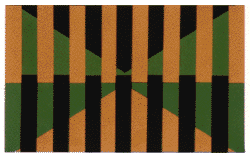
I saw this a couple days ago on a different forum. I didn't see it then and I don't see it now. The guys on the other forum posted this other pic saying that this one is easier to see, but I cant see this one either
__________________

|
|
#10
10-01-2002, 06:17 PM
|
||||
|
||||
|
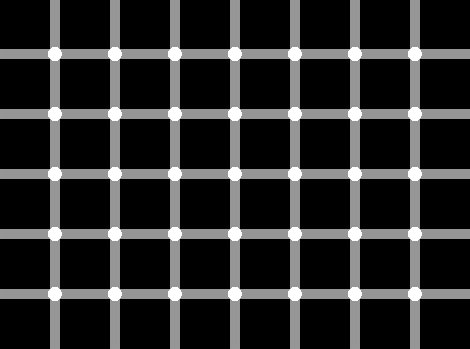
I've always liked this one. It's fun to look at
__________________
|
|
#11
10-01-2002, 06:30 PM
|
||||
|
||||
|
Quote:
wow....just given me a headache there.......even though I've seen that one before..
__________________
|
|
#12
10-01-2002, 06:34 PM
|
||||
|
||||
|
www.eyetricks.com has a whole bunch of these. some are actually really good
__________________
|
|
#13
10-01-2002, 06:38 PM
|
||||
|
||||

__________________
|
|
#15
10-01-2002, 06:48 PM
|
||||
|
||||
|
now that ci5ic has shown it does work and how you can see it....................for the technically minded this is why it works....
:flash: :flash: :flash: :flash: :flash: :flash: :flash: :flash: :flash: :flash: :flash: :flash: :flash: :flash: :flash: :flash: :flash: :flash: :flash: :flash: :flash: :flash: :flash: :flash: :flash: :flash: :flash: :flash: :flash: :flash: :flash: The visual system needs to determine the color of objects in the world. In this case the problem is to determine the gray shade of the checks on the floor. Just measuring the light coming from a surface (the luminance) is not enough: a cast shadow will dim a surface, so that a white surface in shadow may be reflecting less light than a black surface in full light. The visual system uses several tricks to determine where the shadows are and how to compensate for them, in order to determine the shade of gray "paint" that belongs to the surface. The first trick is based on local contrast. In shadow or not, a check that is lighter than its neighboring checks is probably lighter than average, and vice versa. In the figure, the light check in shadow is surrounded by darker checks. Thus, even though the check is physically dark, it is light when compared to its neighbors. The dark checks outside the shadow, conversely, are surrounded by lighter checks, so they look dark by comparison. A second trick is based on the fact that shadows often have soft edges, while paint boundaries (like the checks) often have sharp edges. The visual system tends to ignore gradual changes in light level, so that it can determine the color of the surfaces without being misled by shadows. In this figure, the shadow looks like a shadow, both because it is fuzzy and because the shadow casting object is visible. The "paintness" of the checks is aided by the form of the "X-junctions" formed by 4 abutting checks. This type of junction is usually a signal that all the edges should be interpreted as changes in surface color rather than in terms of shadows or lighting. As with many so-called illusions, this effect really demonstrates the success rather than the failure of the visual system. The visual system is not very good at being a physical light meter, but that is not its purpose. The important task is to break the image information down into meaningful components, and thereby perceive the nature of the objects in view.:flash: :sun: :flash: :flash: :flash: :flash: :flash: :flash: :flash: :flash: :flash: :flash: :flash: :flash: :flash: :flash: :flash: :flash: :flash: :flash: :flash: :flash: :flash: :flash: :flash: :flash: :flash: :flash: :flash: :flash: :flash: :flash: :flash:
__________________
|
| ||||||||||||||||||||||||||||||||||||||
|
POST REPLY TO THIS THREAD |
 |
|
|



 .........


