

|
| Search | Car Forums | Gallery | Articles | Helper | Air Dried Fresh Beef Dog Food | IgorSushko.com | Corporate |
|
#1
 07-13-2004, 10:24 AM
|
||||
|
||||
 Roller Rocker Arms Question!
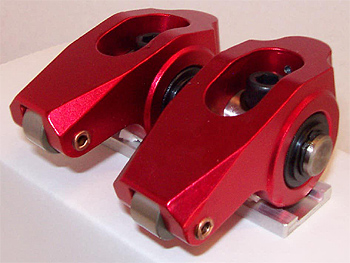
What kind of Roller Rocker Arms do you recommend for a GTP with 3.4 pulley, Fenderwell Intake, Removed U-Bend, No Resonator, No Cat, Magnaflows, and DHP PCM???
1.6:1, 1.9:1 ??? or other... Thanks
__________________
RED 1999 Grand Am GT - RAM AIR V6 H.O., 4drs, sunroof, and more!

|
|
#2
07-13-2004, 11:42 AM
|
||||
|
||||
|
If it were me id go with the 1.9 rockers from www.intense-racing.com only problem is if you have alot of miles on the motor then you may want to look into some LS1 valve springs so you dont have a problem with valve float..........~Larry~
__________________
 ClubGP Member 6530 Since 2001
|
|
#3
07-13-2004, 11:51 AM
|
||||
|
||||
|
Re: Roller Rocker Arms Question!
I have 97k miles on it, and the works are recently full repaired (about 1 month ago)
__________________
RED 1999 Grand Am GT - RAM AIR V6 H.O., 4drs, sunroof, and more!
|
|
#4
07-13-2004, 11:53 AM
|
||||
|
||||
|
Re: Roller Rocker Arms Question!
sorry, heads
__________________
RED 1999 Grand Am GT - RAM AIR V6 H.O., 4drs, sunroof, and more!
|
|
#5
07-13-2004, 06:34 PM
|
|||
|
|||
|
Re: Roller Rocker Arms Question!
Quote:
I would recommend new/stronger springs with any install with these... I had valve float with only 10,000 miles on my car!
|
|
#6
07-14-2004, 03:11 PM
|
|||
|
|||
|
i have the 1.9 rockers w/o the springs, and i was wondering just how does valve float affect the engine/power. i've noticed when i let off of the gas, the car makes a sort of gurgling noise that it didn't before the rockers; could that be a sign of valve float. all in all, i am happy w/ the intense 1.9 rockers, so i would reccomend them.
|
|
#7
07-15-2004, 02:44 AM
|
|||
|
|||
|
okay
valve float does not occur when you take your foot off the gas, it happens when your WOT and pushing high rpms. Basically the concept is both the intake and exhaust valves are open at the same time because the spring pressure is insufficient to close one fast enough. This will cause instant power loss.
|
|
#8
07-17-2004, 04:37 AM
|
|||
|
|||
|
FYI, the stock rockers are 1.6:1
Yes valve float happens at high rpm and it is caused be insufficient spring pressure...but it's not when both the intake and exhaust opens at the same time. All camshafts will open the intake and exhaust valves at the same time...it's called overlap and it happens while the exhaust is closing and the intakes are opening. Without getting to deep into it, this overlap helps with scavenging of the cylinder of exhaust gasses. Most aftermarket cams will have a bigger overlap than stock to help upper-rpm horsepower. Boosted motors normally will want a shorter overlap cam than an NA motor designed to operate in the same rpm range. Boosted motors usually respond very well to higher lifts, which is why the 1.9:1 rockers are a good idea. Valve float is when part of the valve train loses physical contact with another part, i.e. cam to lifter, lifter to pushrod, pushrod to rocker, and/or rocker to valve while the valve is closing (usually right after peak lift)...thus the name "valve float." This screws up the valve timing (not to mention is hard on the related parts) and that is why you lose power. It can also lead to broken springs, bent pushrods which in turn can lead to contact between the valve and piston. This is why you should get new springs...it's good insurance.
|
|
 |
POST REPLY TO THIS THREAD |
 |
|
|






