-
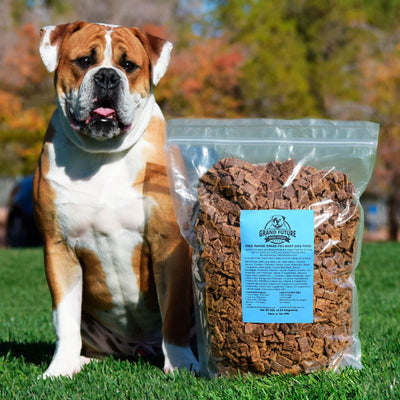
Grand Future Air Dried Fresh Beef Dog Food
Air Dried Dog Food | Fresh Beef

Carnivore Diet for Dogs

Go Back   Automotive Forums Car Chat > Chevrolet > Avalanche | C&K | Silverado | Suburban | Tahoe > Silverado
Register FAQ Community
Reply Show Printable Version Show Printable Version | Subscription Subscribe to this Thread
 
Thread Tools
  #1  
Old 04-21-2011, 10:36 PM
mparmley mparmley is offline
AF Newbie
 
Join Date: Dec 2007
Posts: 12
Thanks: 0
Thanked 0 Times in 0 Posts
1998 K1500 w/P0420 code

I have a 1998 K1500 with approx. 181,000 miles on it. I have a INNOVA CanOBD2+ABS diagnostic scanner tool. I ran the diagnostics on it and it came up with a P0420 code.

I already know the possible problems.
My scanner came up with some numbers. They are as follows:

CALC Load (%) 2.7
ECT (F) 188 (this is engine coolant temp)
STFT B1 (%) -1.5
LTFT B1 (%) 6.2
STFT B2 (%) 0
LTFT B2 (%) 3.9
MAP (inHG) 10.9
Eng RPM 547
Veh Speed 0
MAF (lb/min) 0.871
TPS (%) 0

Im not sure if these are "good" values or not. Ive searched all over the internet trying to figure if these are within limits or not. I do know what most of the abbreviations are but not sure if the numbers are good. This truck has 3 o2 sensors. 2 upstream and 1 downstream if i remeber right. At $75 dollars a piece i dont want to throw parts at it. Cat converters are quite spendy as well. Any help would be appreciated.

My truck does run a little rough and have noticed a slight drop in fuel mileage. Other than that it seems to be normal.

Thanks
Mike
Reply With Quote
  #2  
Old 04-22-2011, 06:22 AM
MT-2500's Avatar
MT-2500 MT-2500 is offline
AF - Advisor
 
Join Date: Sep 2005
Posts: 16,690
Thanks: 5
Thanked 121 Times in 120 Posts
Re: 1998 K1500 w/P0420 code

Quote:
Originally Posted by mparmley View Post
I have a 1998 K1500 with approx. 181,000 miles on it. I have a INNOVA CanOBD2+ABS diagnostic scanner tool. I ran the diagnostics on it and it came up with a P0420 code.

I already know the possible problems.
My scanner came up with some numbers. They are as follows:

CALC Load (%) 2.7
ECT (F) 188 (this is engine coolant temp)
STFT B1 (%) -1.5
LTFT B1 (%) 6.2
STFT B2 (%) 0
LTFT B2 (%) 3.9
MAP (inHG) 10.9
Eng RPM 547
Veh Speed 0
MAF (lb/min) 0.871
TPS (%) 0

Im not sure if these are "good" values or not. Ive searched all over the internet trying to figure if these are within limits or not. I do know what most of the abbreviations are but not sure if the numbers are good. This truck has 3 o2 sensors. 2 upstream and 1 downstream if i remeber right. At $75 dollars a piece i dont want to throw parts at it. Cat converters are quite spendy as well. Any help would be appreciated.

My truck does run a little rough and have noticed a slight drop in fuel mileage. Other than that it seems to be normal.

Thanks
Mike
DTC P0420, P0421, and P0430 & P0431: Check Possible Cause Of Misfire DTC P0420 and P0421 indicate bank one catalyst system efficiency is minimum requirement. DTC P0430 and P0430 indicate bank 2-catalyst system efficiency is minimum requirement. Possible causes are as follows: Use of leaded fuel. Oil contamination. Cylinder misfire. Fuel pressure too high. HO2S sensor improperly connected. Damaged exhaust system component. Faulty ECT sensor. Faulty HO2S. Ensure ignition timing is correct. Retrieve all Continuous Memory DTCs. If misfire code is not present, go to next step. If misfire code is present, isolate cylinder and repair as necessary. Check HO2S Monitor DTCs If DTCs P0136, P0138, P0140, P0141, P0156, P0158, P0160, or P0161 were present in step 1), service as necessary before continuing. If none of these codes are present in step 1), go to next step. Check ECT Sensor DTCs If DTCs P0117, P0118, P0125 or P1117 were present in step 1), service as necessary before continuing. If none of these codes are present in step 1), go to next step. If any codes except P0420, P0421, P0430 and/or P0430 were present in step 1), service as necessary before continuing. If no codes except P0420 and/or P0430 were present in step 1), go to next step. Check Rear HO2S Wiring Harness Turn ignition off. Ensure HO2S wiring harness is correctly routed and connectors are tight. Repair or replace as necessary. If wiring harness and connectors are okay, go to next step. Check Fuel Pressure Turn ignition off. Release fuel pressure. Install fuel pressure gauge. Start engine and allow to idle. Note fuel pressure gauge reading. Increase engine speed to 2500 RPM and maintain for one minute. For fuel pressure specifications, see FUEL PRESSURE SPECIFICATIONS article. If fuel pressure is as specified, go to next step. If fuel pressure is not as specified, go to CIRCUIT TEST HC. Check For Exhaust System Leaks If exhaust system leaks, it may cause catalyst monitor efficiency test to fail. Inspect exhaust system for cracks, loose connections or punctures. Repair or replace as necessary. If exhaust system is okay, go to next step. Check For Exhaust System Restrictions Inspect exhaust system for collapsed areas, dents or excessive bending. Repair or replace as necessary. If exhaust system is okay, go to next step. Check Manifold Vacuum Install tachometer. Connect vacuum gauge to intake manifold vacuum source. Start engine and raise engine speed to 2000 RPM. Manifold vacuum should rise to more than 16 in. Hg. If manifold vacuum is okay, go to next step. If manifold vacuum is low, go to step 11). Leave tachometer and vacuum gauge connected. Start engine and raise engine speed to 2000 RPM. On a non- restricted system, manifold vacuum should quickly rise to normal range as increased RPM is maintained. On a restricted system, manifold vacuum will slowly rise to normal range as increased RPM is maintained. If manifold vacuum is okay, no indication of exhaust leak or restriction has been detected and testing is complete. If manifold vacuum is low or slow to respond, go to next step. Leave tachometer and vacuum gauge connected. Remove exhaust pipe from exhaust manifold. Start engine and raise engine speed to 2000 RPM. If manifold vacuum is now okay, fault is downstream from exhaust manifold. Reconnect exhaust pipe to exhaust manifold and go to next step. If manifold vacuum is still low or slow to respond, fault is in exhaust manifold or intake manifold gasket. Repair or replace as necessary and repeat QUICK TEST. Leave tachometer and vacuum gauge connected. Disconnect muffler/tailpipe assembly from rear of catalytic converter. Start engine and raise engine speed to 2000 RPM. If manifold vacuum is now okay, fault is in muffler/tailpipe assembly. Repair or replace as necessary and test-drive vehicle to verify elimination of symptom. If manifold vacuum is still not okay, fault is in catalytic converter. Repair or replace as necessary. Check tailpipe/muffler assembly for debris from catalytic converter. Test drive vehicle to verify elimination of symptom.
__________________
Remember proper testing gives us the answer to many problems.
MT
Reply With Quote
  #3  
Old 04-22-2011, 06:47 AM
MT-2500's Avatar
MT-2500 MT-2500 is offline
AF - Advisor
 
Join Date: Sep 2005
Posts: 16,690
Thanks: 5
Thanked 121 Times in 120 Posts
Re: 1998 K1500 w/P0420 code

Have you cleared code and see how long it takes to come back.
I main cause of cat code is engine not running right.
When was your last good AC delco tune up?
Any cold air intakes or K & N filters bosh plugs programers on it?
Any other codes?

To see what engine running and fuel trims and 02 sensors are doing you have to watch scanner readings on the road AT A GOOD STEADY SPEED after it has been drove 15-25 minutes.
Watch fuel trims on both sides for even and low trims.
Watch the 02 sensor readings into and out of cats.
After engine tuned up and running good and make sure fuel pressure is up to specs.

If both readings the same you cat has bit the dust/ Kicked the bucket on the last 7 life.
__________________
Remember proper testing gives us the answer to many problems.
MT
Reply With Quote
  #4  
Old 04-22-2011, 06:54 AM
MT-2500's Avatar
MT-2500 MT-2500 is offline
AF - Advisor
 
Join Date: Sep 2005
Posts: 16,690
Thanks: 5
Thanked 121 Times in 120 Posts
Re: 1998 K1500 w/P0420 code

As to the scanner sensor readings a good start is with reading the scanner instruction manual.

A all data DIY online subscription covers all codes and repair flow charts for codes and should have proper sensor readings and adv on them.

Will cost about 25 $ first sub but will pay for itself many times.
__________________
Remember proper testing gives us the answer to many problems.
MT
Reply With Quote
  #5  
Old 04-22-2011, 09:49 AM
j cAT j cAT is offline
AF Fanatic
 
Join Date: Oct 2007
Posts: 10,898
Thanks: 8
Thanked 432 Times in 431 Posts
Re: 1998 K1500 w/P0420 code

this usually means the converter is defective. replace the down stream O2 sensor. this could be at the end of its life. the other items that can cause this would be the upstream O2 sensors are out of spec and caused the converters to fail. the O2 sensors are good for 100,ooomiles. then they start to get out of spec causing the engine to run at the wrong fuel mixture.

since your intake manifold vacuum is low I would guess with the symptoms your engine has it is a restricted exhaust [cat converter] ...

with a vacuum guage hooked up at idle vac should be 17-21 in ...rev engine to 2,ooo rpm does the vac drop and stay low ? it should drop and then rapidly rise to 17-21 in if good..


remove the upstream O2 sensor leave hole open go for test drive also do the vac test as above see if it is now good..
Reply With Quote
  #6  
Old 04-23-2011, 12:08 PM
mparmley mparmley is offline
AF Newbie
Thread starter
 
Join Date: Dec 2007
Posts: 12
Thanks: 0
Thanked 0 Times in 0 Posts
Re: 1998 K1500 w/P0420 code

Just wanted to add that i had replaced exhaust behind the Cats. New mufflers and pipes.

I cleared the code last night and have driven it around town and on the interstate for about 20 miles. It seems to run real good. Nice acceleration no hesitation throughout all ranges. Could this have been the problem. I only had one fault code and it was P0420. No others.

My old exhaust had a leak at the flange behind the last cat going into the muffler. And the muffler was shot.

Thanks everyone for the replies.
Mike
Reply With Quote
  #7  
Old 04-23-2011, 01:33 PM
j cAT j cAT is offline
AF Fanatic
 
Join Date: Oct 2007
Posts: 10,898
Thanks: 8
Thanked 432 Times in 431 Posts
Re: 1998 K1500 w/P0420 code

Quote:
Originally Posted by mparmley View Post
Just wanted to add that i had replaced exhaust behind the Cats. New mufflers and pipes.

I cleared the code last night and have driven it around town and on the interstate for about 20 miles. It seems to run real good. Nice acceleration no hesitation throughout all ranges. Could this have been the problem. I only had one fault code and it was P0420. No others.

My old exhaust had a leak at the flange behind the last cat going into the muffler. And the muffler was shot.

Thanks everyone for the replies.
Mike
If this was a restricted exhaust due to a bad/baffle damaged muffler you would not be the first to have what appears to be a defective restricted cat converter...ever had a rodent nest cause this problem ? I have seen this ...

looks like you found it ..also with exhaust leaks this can messup the engine management and cause low MPG ....you should find a better MPG/power now.. good luck thanks for reporting your findings/results.
Reply With Quote
 
Similar Threads
Thread Thread Starter Forum Replies Last Post
96 1.0 with P0420 Code Cybrj Metro 2 05-17-2010 02:26 PM
98 K1500 missing ChaparralSuburban Suburban 7 07-13-2009 07:35 PM
1998 K1500 Starts and Dies- MAP Code bigj-dog C/K 8 12-03-2007 05:12 PM
1998 Pontiac Transport Engine code P0420 fouchydog Trans Sport 1 05-23-2007 09:50 AM
98 Chev Blazer P0420 Code tombo S-10 1 07-17-2003 11:36 PM

Reply

POST REPLY TO THIS THREAD

Go Back   Automotive Forums Car Chat > Chevrolet > Avalanche | C&K | Silverado | Suburban | Tahoe > Silverado


Posting Rules
You may not post new threads
You may not post replies
You may not post attachments
You may not edit your posts

BB code is On
Smilies are On
[IMG] code is On
HTML code is Off


All times are GMT -5. The time now is 04:20 AM.

Community Participation Guidelines | How to use your User Control Panel

Powered by: vBulletin | Copyright Jelsoft Enterprises Ltd.
 
 
no new posts