

|
| Search | Car Forums | Gallery | Articles | Helper | Air Dried Beef Dog Food | IgorSushko.com | Corporate |
|
|||||||
| Engineering/ Technical Ask technical questions about cars. Do you know how a car engine works? |
 |
 Show Printable Version | Show Printable Version |  Subscribe to this Thread
|
|
|
Thread Tools |
|
#1
 01-30-2010, 02:54 PM
|
||||
|
||||
|
Automotive structural fatigue.
Has anyone come across any research on this subject? Over the years, I have come across many cars where the structure (body/chassis) was tight and solid when new, but seem to loosen up and become more flexible over time, particularly unit-body cars.
This manifests itself in noises, creaks and groans from the doors, windows and interior panels when the chassis is stressed when driving. Also from doors twisting and shifting slightly in the door frame, when closed. This stress can come from anything that twists or bends the structure, such as driving over curbs into parking lots, from speed bumps, uneven ground, applying the brakes, releasing the clutch and/or hard acceleration. I expect this in badly-rusted cars, or trucks that have been overloaded regularly, since the structure has been weakened. But it has happened in many rust-free older cars, including European, Japanese and domestic brands. So, do these structures have a limited lifespan? Will they eventually collapse? Does it make sense to scrap a car simply because it becomes too flexible/fatigued? And exactly what is becoming weaker.... is it the welds, adhesives or simply the metal is weakening, like when you bend a piece of wire many times over. Any thoughts? 
|
|
#2
01-30-2010, 07:09 PM
|
|||
|
|||
|
Re: Automotive structural fatigue.
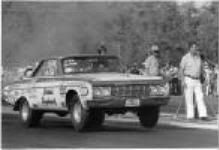
Great subject, I can tell you in my 64 426 race car which had a subframe and torque boxes showed fatigue at around 500 runs with no frame connectors or rollcage, the roof developed a slight kink over the drivers door. I would think a modern unibody car would have to be punished pretty good to affect anything critical, where I live rust is a never ending issue for these cars. IE: a 200k 98 LTZ had badly rusted rear control link attaching boxes in the unibody that were on the edge of safety. It seems modern fwd cars are well made and supported in the floors and rockers using high strength steel components in critical areas.
__________________
|
|
#3
01-30-2010, 08:22 PM
|
||||
|
||||
|
Re: Automotive structural fatigue.
As metal flexes, it stretches and hardens. (at least most alloys of steel and aluminum used in vehicle construction). Its why steel breaks after you bend it repeatedly. If you have a sheet of steel and you bend it, the outside radius of the steel stretches. The inside radius doesn't really shrink. Then as you bend it back, the outside radius doesn't re-shrink, the former inside radius simply stretches out. The result is that each successive bend makes the steel thinner and thinner around the bend.
The stretching also has a bit of a "forging" effect as it aligns the grain. Ever pull a wad of steel wool apart? Its easy to start because the fibers are random, but as you pull it and they all align, it reaches a point where its very difficult to pull further. Over the life of a car, this hardening happens on an infinitesmally slow rate from vibration and flexing. The area nearest welds is particularly succeptible to this since they began life being hardened by the intense heat of welding which introduces additional carbon into the molten steel. The rest of the noise typically comes from plastic clips and adhesives eroding from interior parts and trim. I haven't studied this particular effect on a mathematical level where it concerns cars, but I kinda have a grasp on how it seems to affect a vehicle assembly.
__________________
Dragging people kicking and screaming into the enlightenment.
|
|
#4
01-30-2010, 11:39 PM
|
|||
|
|||
|
Re: Automotive structural fatigue.
Quote:
For the assembly, I would think your statement about adhesives and clips to be more of a culprit. As well as how any joints and fasteners are affected. Also, I would add thermal stress and CTE mis-match as another source of wear on the assembly, especially when combined with vibration. I know if hit a bump in my van when it is really cold it sounds like I just jumped a ditch, some times it is so bad I think the windshield is going to crack. However, when it is warm it sounds completely different. Not to mention the feel of the vehicle is completely different in the cold, I almost feel bad for the car when it is really cold.
__________________
|_|_|_|_|_|_|_|_|_|
|
|
#5
01-31-2010, 04:06 AM
|
||||
|
||||
|
Re: Automotive structural fatigue.
Good points.
I have noticed my older cars creak, groan and pop much more in the cold. Some of this is the effect on adhesives, some I think is because the ride is stiffer, due to more rigid tires and shocks. As for structural fatigue, this reminds me that most older Fox-body Mustangs I have encountered develop floor pan cracking behind the driver's seat. My old '79 V8 Mustang had massive cracking that I had to weld up. I noticed the metal was 'work-hardened', like dented and hammered body work, as Curtis says. Even my '87 4 cyl Mustang had this same problem. Other cracking examples.... second-gen Camaros and Firebirds would sometimes develop cracked roofs, especially the T-tops
|
|
#6
01-31-2010, 10:29 AM
|
|||
|
|||
|
Re: Automotive structural fatigue.
Quote:
One thing that would interesting is to see some of these cracks, in particular where they originated. For a complex geometry any kind of change in geometry (i.e. holes, corners, joints) are going to be areas of increased stress and therefore reduced fatigue life. So I would expect those kind of areas to be some of the first to start to fatigue.
__________________
|_|_|_|_|_|_|_|_|_|
|
|
#7
01-31-2010, 11:09 AM
|
||||
|
||||
|
Re: Automotive structural fatigue.
Most metals have 2 phases of distortion...elastic and plastic. As a metal starts to bend, it goes through the elastic phase where below a certain stress threshold it will not permanently deform. This material property is taken advantage of in many structures such as bridges and buildings to tolerate wind, vehicle loads, and temperatures. Some metals can elastically bend quite a bit and others can't. As mentioned above, how the metal is processed at the foundry...the specific alloying elements, heat treating and working to create and refine the grains and precipitates in the microstructure...determine its properties when put to use.
After elastic comes plastic, and logically, any localized areas that exceed this threshold will not completely return to their original shape. This threshold can be seen on a material's stress/strain curve, or more commonly, expressed as a yield strength in ksi (1000s of psi) or in MPa (mega-Pascals). Above this stress, the material will begin to plastically deform. Fatigue sets in when the periodic bending creates a localized area of plastic deformation, either through a stress riser like a hole, crack, sharp bend, rust formation, or weld. As the metal cycles, the fatigued area work-hardens and the crack propagates to an adjacent area that is not hardened thus easier to bend, and so on, and so on. If you ever see a fatigue crack up close you'll see the classic "beach marks" where the metal gives way after a certain number of cycles. It is a fascinating subject to me, and sadly the basis for many of life's great structural failures. For one, in the auto world, it is the reason for late 90s 3-series E46 rear subframe cracking failures.
__________________
Current Garage: 2009 Honda CR-V EX 2006 Mazda 3i 2004 Chevrolet Silverado 2500HD 2003 GMC Envoy XL 2000 Honda ST1100 2000 Pontiac Sunfire Vehicle History: 2003 Pontiac Vibe AWD - 1999 Acura Integra GS - 2004 4.7L Dakota Quad Cab 4x4 - 1996 GMC Jimmy 4wd - 1995 Chevrolet C2500 - 1992 Toyota Camry LE 2.2L - 1992 Chevrolet S10 Ext. Cab 4.3L - 1995 Honda ST1100 - 1980 Yamaha XS400 - 1980 Mercury Bobcat. Last edited by jdmccright; 01-31-2010 at 11:32 AM. Reason: Added info
|
|
|
POST REPLY TO THIS THREAD |
 |
|
|





