-
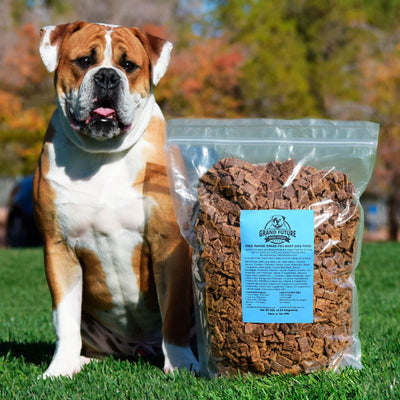
Grand Future Air Dried Fresh Beef Dog Food
Air Dried Dog Food | Fresh Beef

Carnivore Diet for Dogs

Go Back   Automotive Forums Car Chat > Engineering/ Technical
Register FAQ Community
Engineering/ Technical Ask technical questions about cars. Do you know how a car engine works?
Reply Show Printable Version Show Printable Version | Subscription Subscribe to this Thread
 
Thread Tools
  #16  
Old 01-30-2002, 08:35 PM
fritz_269's Avatar
fritz_269 fritz_269 is offline
AF Moderator
 
Join Date: Dec 2001
Posts: 4,671
Thanks: 0
Thanked 0 Times in 0 Posts
This is HUGE - but it will answer all your questions (and more) about gasoline:

http://www.faqs.org/faqs/autos/gasoline-faq/part1/

(Parts 6 and 7 talk about octane ratings)
Reply With Quote
  #17  
Old 01-31-2002, 07:38 AM
SaabJohan SaabJohan is offline
AF Enthusiast
 
Join Date: Nov 2001
Posts: 1,098
Thanks: 0
Thanked 0 Times in 0 Posts
Quote:
Originally posted by fritz_269
This is HUGE - but it will answer all your questions (and more) about gasoline:

http://www.faqs.org/faqs/autos/gasoline-faq/part1/

(Parts 6 and 7 talk about octane ratings)
That's what I refered from in my previus post.

I really recommend you to read that faq.
Reply With Quote
  #18  
Old 02-01-2002, 06:08 AM
LeGoLaS LeGoLaS is offline
AF Newbie
Thread starter
 
Join Date: Jan 2002
Posts: 7
Thanks: 0
Thanked 0 Times in 0 Posts
Thumbs up

DAM...

I would of never thought i would have gotten this much input back, thanks. So if i heard this right, If i am driving say my 91 topaz 2.3l 4cyl.
which runs fine at 87 octane, and i put say 92 octane in, this will not increase my fuel economy.
Reply With Quote
  #19  
Old 02-01-2002, 08:01 PM
SaabJohan SaabJohan is offline
AF Enthusiast
 
Join Date: Nov 2001
Posts: 1,098
Thanks: 0
Thanked 0 Times in 0 Posts
You can try. In worst case you have lost a few bucks in the more expensive fuel.
Reply With Quote
  #20  
Old 03-02-2002, 04:26 PM
454Casull 454Casull is offline
AF Enthusiast
 
Join Date: Mar 2002
Posts: 615
Thanks: 0
Thanked 0 Times in 0 Posts
How can an octane rating go over 100? I thought that the octane rating was the percentage of C8H18 in the gas, with most of the remainder heptane.
__________________
Some things are impossible, people say. Yet after these things happen, the very same people say that it was inevitable.
Reply With Quote
  #21  
Old 03-02-2002, 05:12 PM
texan's Avatar
texan texan is offline
Writer Mod
 
Join Date: Jan 2001
Posts: 714
Thanks: 0
Thanked 0 Times in 0 Posts
Yes, technically you can't go over 100 on that scale in terms of real values. Octane is 100, heptane is 0, but what we really mean by 104 octane gas is that this fuel is 4% more resistant to compression based ignition than pure iso-octane in MON and/or RON testing.
__________________
'03 Corvette Z06
'99 Prelude SH
Reply With Quote
  #22  
Old 03-02-2002, 10:47 PM
ivymike1031 ivymike1031 is offline
AF Enthusiast
 
Join Date: Feb 2002
Posts: 743
Thanks: 0
Thanked 0 Times in 0 Posts
Send a message via AIM to ivymike1031 Send a message via Yahoo to ivymike1031
yep...

I think it's important to keep in mind that the octane number on your fuel from the gas station doesn't really tell you anything about the composition of the fuel, except that whatever is in there has anti-knock properties similar to a particular mixture of octane/heptane. In other words, 87 octane gas from the station isn't likely to be 87% octane, 13% heptane, it just knocks as though it was.
__________________
Come on fhqwhgads. I see you jockin' me. Tryin' to play like... you know me...
Reply With Quote
  #23  
Old 03-03-2002, 05:22 PM
454Casull 454Casull is offline
AF Enthusiast
 
Join Date: Mar 2002
Posts: 615
Thanks: 0
Thanked 0 Times in 0 Posts
Cool. Thanks.
__________________
Some things are impossible, people say. Yet after these things happen, the very same people say that it was inevitable.
Reply With Quote
  #24  
Old 03-03-2002, 06:51 PM
Chris's Avatar
Chris Chris is offline
Oldie
 
Join Date: Jan 2001
Posts: 2,807
Thanks: 0
Thanked 0 Times in 0 Posts
Send a message via AIM to Chris Send a message via MSN to Chris
Heres my little spiel (didn't read thread, so forgive any dumb stuff)

Higher Octane=Lower power
Higher Octane required for: High compression engines, high-strung engines, super/turbo charged engines, engines with a high volumetric efficiency.

Now that your all screaming, heres why. Octane is the resistance to combustion. The higher the number, the more energy required to ignite it. The scale is based on Octanal (C3H8), but is actually made of many different things, that is why octane can go over 100 (%100)
So the higher the octane rating, the more heat is required to ignite it, for the same amount of power (not possible, but more on that later.) So if you took 50joules to ignite 50 octane, and 100 joules to ignite 100 octane. Both produce 10000 joules of energy. So the 50 octane produces 50 more joules than the 100 octane.
So why dont we all run super-low octane (like ethlyene, the most reactive gas around, which is C2H2)?? Well, then the gas would start burning before it should. Like then the piston is only half up. This would blow your engine up. Because when the piston rises up, it creates heat from the compression. And its not like the block itself is cold. So this is energy, and if its enough to ignite the gas, you have a problem. You want the gas to stay unlit until the spark plug lights it. (note: diesel engines work by letting the gas ignite from the heat created by compression, and there can be no screwing with the diesel octane, because that would cause problems that you now understand). Having a turbo on the car, or high V.E., that means there is more air and gas in the cylinder, and more heat is created from compression, requiring a higher octane to keep premature ignition down.

If the gas does ignite early, it can cause damage. If all you hear is a ping, put in a higher octane to stop it. If you hear a knocking, stop immediatly and put in lots of octane booster, and hope you dont kill the engine.

Now to the fact that gas is very different from one octane to the other. Different substances release different amounts of heat (ethylene might make 10 joules per ml, octane might make 8 joules) So the trick is trying to put in the chemicals that create the most amount of heat, but have the highest resistance to detonation. This happened in the 80's with F1, the teams making super-expensive fuels that had really high octane ratings, but also produced alot of energy. This was stopped due to the amazing cost.

Any questions?
__________________
You can live in a car, but you can't drive a house!!
MSN: [email protected]
Reply With Quote
  #25  
Old 03-03-2002, 09:25 PM
texan's Avatar
texan texan is offline
Writer Mod
 
Join Date: Jan 2001
Posts: 714
Thanks: 0
Thanked 0 Times in 0 Posts
First off, octanal is NOT the high point sample fuel used in MON and RON testing. It's iso-octane as earlier stated, which is C8H18. Octanal is CH3(CH2)6CHO, and is used in artifical scent and flavor production (it has a strong fruity odor).

Secondly, octane rating is not resistance to combustion. It is resistance to heat based combustion, and there's a huge difference there. Your example of lower octane gasoline having a net increase in total power efficiency assumes that we are using heat based ignition, which we aren't. This is an Otto cycle engine we are speaking of with spark based ignition, and one of the basic tenants in such an engine design states that an increase in static compression, assuming there is no onset of auto-ignition, will ALWAYS increase the thermal efficiency of said engine. The positive effects of increased static compression on engine power output, low RPM throttle response and cylinder filling are well documented in the annals of engine performance.

There are other points to be made in reference to your post, but I suggest you first read the earlier mentioned gasoline FAQ before moving on (so you can see where some of us have gotten most of our information from). Specifically, notice why one fuel is more resistant to heat based ignition than another (HINT: the trick is in end gas decomposition).
__________________
'03 Corvette Z06
'99 Prelude SH
Reply With Quote
  #26  
Old 03-04-2002, 10:54 AM
Chris's Avatar
Chris Chris is offline
Oldie
 
Join Date: Jan 2001
Posts: 2,807
Thanks: 0
Thanked 0 Times in 0 Posts
Send a message via AIM to Chris Send a message via MSN to Chris
Um, I forgot to mention that keeping the gas from igniting meant you could use more compression or a higher volumetric efficiency, which would greatly offset any drop in potential power from the fuel itself.
__________________
You can live in a car, but you can't drive a house!!
MSN: [email protected]
Reply With Quote
 
Similar Threads
Thread Thread Starter Forum Replies Last Post
93 Octane VS. 87 Octane Gas freesiagirl Metro 4 09-03-2007 05:11 PM
Is 87 octane gas with octane booster as good as 93? Spectre120 Camaro Discussions 28 10-20-2004 05:51 PM
87 octane in 93 octane required car ZachE84 Engineering/ Technical 11 10-10-2004 02:50 AM
Octane Boosters and 89 or 93 octane gas blazzingbrandon 4Runner/GX470 2 08-29-2004 02:02 AM
Octane Booster madman General Discussion 5 06-27-2001 09:38 PM

Reply

POST REPLY TO THIS THREAD

Go Back   Automotive Forums Car Chat > Engineering/ Technical


Posting Rules
You may not post new threads
You may not post replies
You may not post attachments
You may not edit your posts

BB code is On
Smilies are On
[IMG] code is On
HTML code is Off


All times are GMT -5. The time now is 01:59 AM.

Community Participation Guidelines | How to use your User Control Panel

Powered by: vBulletin | Copyright Jelsoft Enterprises Ltd.
 
 
no new posts