|
History of the Civic: 1973-2000
Quote:
|
The Honda Civic:
Prior to 1973, Honda was a company known more for its motorcycles than for its cars, which were tiny two-cylinder 600cc runabouts. This changed when the Civic debuted for 1973. The Civic offered amazing space efficiency in a fun little car that achieved more than 40 mpg on the highway. Two similar body styles were available, a hatchback and a "sedan." These Civics were identical, even the rear of the cars looked the same, except that one had a hatchback and the other had a small vertical panel that opened to allow access to the "trunk." Standard equipment included power front disc brakes, vinyl seating, reclining bucket seats and a woodgrain-accented dashboard. The hatchback added a fold-down rear seat, an AM radio and cloth upholstery. Options were minimal, consisting of air conditioning, an automatic transmission, radial tires and a rear wiper for the hatchback.
The 1,169cc (or about 70-cubic-inch) inline four-cylinder engine put out 50 horsepower. Transmissions offered included a four-speed manual or a two-speed "Hondamatic" automatic gearbox. An all-independent suspension made the Civic an agile econobox that could run circles around American-built competitors like the Ford Pinto and Chevrolet Vega, and with a base price of around $2,200.
For 1974, the Civic's engine size grew slightly, to 1,237 cc and power went up to 52 horsepower. In order to meet the new 5-mph bumper impact standard, the Civic's bumpers grew, as did its overall length, which was now 146.9 inches.
The CVCC (or Controlled Vortex Combustion Chamber) engine debuted in 1975. Offered alongside the standard Civic engine, the 53-horsepower CVCC engine displaced 1,488 cc and had a head design that promoted cleaner, more efficient combustion.[] A five-speed manual gearbox became available this year, as did a Civic station wagon (only with the CVCC engine), which had a wheelbase of 89.9 inches and an overall length of 160 inches.
1978 brought slight cosmetic changes, such as a black grille, rear-facing hood vents and new turn signals. The easiest way to tell a '78 from an earlier example is to look at the front signals: Prior to 1978, they looked like foglights mounted in the Civic's grille, whereas in 1978 they were smaller and mounted under the bumper. The CVCC engine was now rated at 60 horsepower.
Little changed for the 1979 Civic except the base engine increased to 55 horsepower and the CVCC to 63 hp.
1980-1983
A new, sleeker body and increases in wheelbase and base-model engine size marked the 1980 Civic. The wheelbase now measured 88.6 inches for the hatchback (the two-door "sedan" was dropped) and 91.3 inches for the wagon. All Civic engines now used the CVCC design; the base 1,335cc ("1300") engine made 55 horsepower, while the 1,488 ("1500") produced 67 horsepower. Three transmissions were offered: a four-speed manual (on base models), a five-speed manual and a two-speed automatic.
The Civic 1300 and 1500 came in base and DX versions, and the latter featured a five-speed manual, rear window defroster, intermittent wipers and a cigar lighter. The 1500 GL added radial tires, a rear window wiper/washer, tachometer, clock and bodyside moldings. The Civic wagon came in a single version that was tantamount to the DX trim level.
A four-door sedan debuted for 1981, as did a three-speed automatic transmission that replaced the primitive two-speed unit.
Rectangular headlamps and black bumpers appeared on the 1982 Civic. A new gas-sipping model, the five-speed "FE" (Fuel Economy) was introduced and was rated at 41 mpg in the city and 55 mpg on the highway.
The sporty new Civic "S" replaced the 1500 GL in 1983 and was fitted with a firmer suspension (with rear stabilizer bar) and 165/70R13 Michelin tires. A red accent encircled the S and set it apart from the other Civics.
1984-1987
The 1984 Civic saw a new wheelbase of 96.5 inches, an increase of 5 inches, making Civic four-doors and wagons identical to the Accord in this dimension. A new 1.5 liter-engine (formerly referred to as 1,500cc) with 12 valves (three valves per cylinder) and 76 horsepower was found underhood, except on the base hatchback, which had a new 1.3-liter 60-horse unit. Transmission choices were the same as previously: four- and five-speed manuals and a three-speed automatic. A revamped suspension, though no longer with an independent rear setup, offered a space-efficient design along with fine ride and handling characteristics.
The lineup consisted of three hatchbacks (base, DX and S), a sedan, a tall wagon and a new two-seater called the CRX. As before, the base car was fairly spartan. The DX came with the five-speed manual, bodyside moldings, a split/folding rear seat, rear window defroster/wiper/washer and tilting steering wheel. The S had sport seats, reclining rear seats and the same hardware upgrades, such as a rear stabilizer bar, as before. The sedan and wagon were again equipped similarly to the DX hatchback.
The new CRX was basically the Civic chassis under a sporty body. Two models were offered: the base CRX and the CRX 1.5. The chief difference between the two was that the base CRX had a 1.3-liter engine (which allowed the car to score amazing fuel economy ratings of 51 in the city and on the 67 highway) and the CRX 1.5 had the 1.5-liter engine. All CRXs had a two-tone paint scheme, comprised of [] White, Blue or Red with a Silver lower bodyside and bumper treatment.
Introduced in 1985, the hot-rod CRX Si came ready to run with a fuel-injected version of the 1.5-liter engine that pumped out 91 horsepower. Able to hit 60 mph in less than 9 seconds, the Si also boasted handling enhancements, such as 14-inch alloy wheels with 185/60R14 high-performance tires. A power sunroof was standard on the Si, as were a monotone paint scheme and sport seats.
A CRX HF (High Fuel economy) model replaced the CRX with the 1.3-liter engine. The HF had an eight-valve version of the 1.5-liter engine that produced just 58 horsepower but offered more torque and thus better acceleration around town. Mileage figures for the HF stood at 52 in the city and 57 on the highway.
The other Civics continued unchanged for this year, with the exception of the wagon, which, later in the model year, became available with four-wheel drive and a six-speed manual gearbox.
Flush-mounted headlights made it easy to tell the 1986 Civics from the older models. Other changes included a four-speed automatic and an Si version of the Civic hatchback, the latter geared toward those who wanted the performance of the CRX Si but needed a four-seat vehicle. Other perks for the Civic Si hatchback included a removable glass sunroof, a full-width taillight panel and color-keyed front airdam and roof spoiler. The CRXs received the same updates as the other Civics, including the flush headlights.
For 1987, the four-wheel-drive (4WD) system for the Civic wagon was revised. "Real Time" 4WD automatically channeled power to the wheels that had optimum grip and did away with the driver having to decide (and then move a lever) if four-wheel drive was needed.
1988-1991
A sleeker and more powerful Civic lineup debuted in 1988. All Civics (except the CRX) rode on a longer 98.4-inch wheelbase. The CRX's wheelbase was increased to 90.6 inches.
Power for the DX hatchback/sedan, new LX sedan and the wagon came from a 1.5-liter 16-valve engine that produced 92 horsepower. The base hatchback had a less powerful 70-horsepower version of that engine. The fuel-economy champ CRX HF had an eight-valve 62-horse version of the 1.5 that could go up to 56 miles on a gallon of gas. The standard CRX had the 92-horse engine. A high-performance 1.6-liter 16-valve engine that kicked out 105 horsepower was installed in the CRX Si and Civic 4WD wagon. All Civic engines were now fuel injected. Previously, only the "Si" models had the injection.
A double-wishbone suspension system was used at all four wheels. Inspired by Formula One race cars, this design promoted agile handling and a comfortable ride by precisely controlling wheel travel and keeping the tire's contact patch square to the road surface.
One model departed (the Civic Si hatchback), as a new one, the Civic LX sedan, was introduced. The LX loaded up a Civic sedan with features such as power windows, locks and mirrors; a tachometer; and intermittent wipers. U.S. production for the Civic began this year in Ohio.
The Civic Si hatchback returned for 1989, now with a power moonroof and once again with the same potent engine (increased to 108 horsepower for this year) installed in the CRX Si and the 4WD wagon.
Revised bumpers and taillights identified the 1990 Civic. Hatchbacks received larger reverse (white) lights, and sedans adopted a horizontal taillight theme. An EX sedan joined the Civic family and took its place at the top of the sedan lineup. The EX had the Si's engine, 14-inch wheels and all the features of the LX (which now included cruise control). Four-wheel disc brakes appeared on the CRX as did a slightly revised dash-board (with softer corners and larger instruments) for all Civic models.
The 1991 Civics were virtually unchanged, and this was the last year for the spunky CRX.
1992-1995
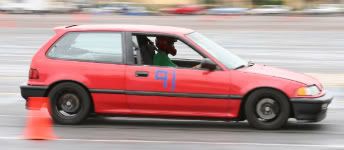
The Civic was al new for 1992. Wheelbases now measured in at 101.3 inches for the two-door hatchback and 103.2 inches for the four-door sedan. The wagon was dropped.
Trim levels for the hatchback included the CX, DX, VX and Si. The CX was fitted with a 1.5-liter 70-horsepower engine; the DX with a 1.5-liter 102-horsepower engine; the VX with a 92-horsepower 1.5-liter with variable valve timing tuned for economy (VTEC-E); and the Si with a 125-horsepower VTEC engine. The VX, which also came with lightweight alloy wheels, managed fuel economy figures of 48 in the city and 55 on the highway * nearly the same as the old CRX HF in spite of 30 more horsepower and five-passenger capability. Sedans came in the same trim levels as before: DX, LX and EX (which added a power moonroof to its list of standard luxuries). The DX and LX had the 1.5-liter 102-horsepower engine, and the EX sported the 125-horse 1.6 from the Si. A five-speed manual was standard across the board, and a four-speed automatic was optional on the DX hatchback and all sedan models.
The level of safety increased with the new Civic via a standard driver-side airbag for all models and standard antilock (ABS) brakes on the EX sedan.
A two-door notchback coupe, which shared its 103.2-inch wheelbase with the sedan, debuted for 1993 and was offered in DX and EX trim levels. The DX was outfitted the same as the DX hatchback, and the EX coupe had the same features as the EX sedan, including the 125-horse engine and power moonroof. An option package for the EX coupe added a passenger airbag and high-power stereo with cassette player. The EX sedan had a few more items added to its already generous standard features list, including air conditioning and the high-power sound system with cassette player.
1994 brought safety advances and an LX version of the Civic sedan. A passenger-side airbag became standard on all Civics, and antilock brakes were now optional on the EX coupe, Si hatchback and LX sedan. The new LX sedan filled the gap between the basic DX sedan and loaded-to-the-gills EX. Power windows, locks and mirrors; cruise control; a tachometer; a stereo with cassette player; and 14-inch (versus the DX's 13-inch) tires were all standard on the LX.
There were no changes for the 1995 Civics.
1996-2000
A revamped Civic lineup debuted for 1996. The new body featured larger light clusters fore and aft, a grille (chrome-accented on sedans) and a crisp character line that ran the length of the car. Hatchbacks now had the 103.2-inch wheelbase of the coupes and sedans, and overall length was up around 2 to 4 inches, depending on body style.
Sedans were again offered in DX, LX and EX trim levels. A new coupe, the HX, joined the DX and EX coupes. The HX coupe essentially replaced the VX hatchback, offering high mileage figures from a fairly powerful engine. The revised VTEC-E engine (now at 1.6 liters) in the HX put out 23 more horsepower (for a total of 115 ponies) than the previous version but now "only" scored mileage figures of 39 in the city and 45 on the highway. A gearless continuously variable automatic transmission (CVT) that promised seamless performance and manual-transmission fuel economy was introduced later in the year as an option for the HX. The hatchback lineup was trimmed down to two models, the CX and DX. A new 1.6-liter 106-horsepower engine that earned Low Emission Vehicle (LEV) certification powered the CX, DX and LX, and a slightly more powerful 127-horsepower VTEC-assisted version was found in the EX models.
In 1997, all Civics came with 14-inch wheels, DX models got full wheel covers, the LX sedan received air conditioning and, strangely, EX coupes with manual transmissions no longer had the option of antilock brakes.
Not much happened in 1998, save for new wheel covers, an exterior handle for hatchbacks and the addition of map lights.
A slightly revised front fascia and taillights, along with redesigned climate controls updated the Civic for 1999. A "Value Package" for the DX sedan debuted that included features that most buyers wanted, such as air conditioning, a CD player, power door locks, automatic transmission and keyless entry, at a substantial savings when compared to the separate option prices.
Midway through the year to the joy of pocket-rocket enthusiasts everywhere, the Civic Si returned, now in the coupe body style and sporting a potent 160 horsepower from its 1.6-liter VTEC engine. A firmer suspension, front strut tower brace, 15-inch alloy wheels wearing 195/55R15 rubber and four-wheel disc brakes completed the hardware upgrades for the Si. A front spoiler, side sills and subtle bodyside graphics set the Si apart from the other Civic coupes, and the standard equipment was generous and similar to that of the EX.
Other than the shuffling of paint choices, the Civic stood pat for the year 2000.
Current Generation
The biggest news is the availability of a Hybrid Civic sedan, which has a more powerful gas/electric powerplant system than in Honda's groundbreaking Insight. This environmentally friendly vehicle offers the room and comfort of a Civic sedan with mileage estimates of 46 mpg in the city and 51 mpg on the highway. Although Toyota brought out its four-door Prius hybrid a few years prior to this Civic's debut, Honda loyalists now have a practical hybrid they can call their own.
There are now three body styles to choose from: coupe, sedan and hatchback. Conservative styling for the sedan and a slightly more aggressive approach for the coupe help to differentiate these two body styles, while the hatchback presents a snub-nosed, city-car look. The hatch is only available as the sporty 160-horsepower Si, while the others are available in familiar DX, HX (coupe only), LX and EX trim levels.
A more spacious cabin features Honda's trademark large, simple controls but greater use of hard plastic trim seems to indicate that the company may be resting on its laurels a bit.
The newest Civics ride on a stiffer platform that decreases chassis flex and thus provides better handling and increased crash protection. But to the chagrin of hard-core enthusiasts, Honda replaced the front double-wishbone suspension setup with a more space-efficient McPherson-strut setup, which isn't as easy to "slam" (lower) as the double-wishbone design. Steering now boasts a quicker ratio along with variable power assist, which makes parking easier while allowing more road feel and response during spirited driving.
Under the hood, the engine's size has been increased slightly (from 1.6 to 1.7 liters) to provide more torque, and transmissions were tweaked for improved shifter feel and greater efficiency.
|
i would add pics...but you know how they look
__________________
The name's Adrian
1990 Civic HB Si - 265.7whp/223tq @9.2psi. Tuned on NepTune by J.Mills
1991 Civic Sedan DX - 296.3whp/230tq @1bar. Tuned on NepTune by J.Mills
1991 Civic Sedan DX - 185.8whp/139tq. Tuned on NepTune by J.Mills
2006 G35 Coupe 6MT - Stock
2011 CR-Z - Stock
|



 Show Printable Version |
  Subscribe to this Thread
 11-01-2006, 03:16 PM