

|
| Search | Car Forums | Gallery | Articles | Helper | Air Dried Beef Dog Food | IgorSushko.com | Corporate |
|
#2
 06-07-2008, 03:27 PM
|
||||
|
||||
|
Re: 1997 Chevy Astro Coolant leak
Intake gaskets are a prime suspect. The leak will allow coolant to be drawn into the end cylinders on each side, then be expelled out the exhaust as vapor. You'd never see a puddle on the ground.
Cozy place, isn't it? 
__________________
Permanent seat assignment on the Group W bench... Automotive Forums Survival Guide 
|
|
#3
06-07-2008, 03:44 PM
|
|||
|
|||
|
Re: 1997 Chevy Astro Coolant leak
Also, check your lower radiator hose for deposits... Sometimes the waterpump will be leaking just enough... The coolant will trail down the hose and dry off leaving deposits....
__________________
CD 1991 W41 #142 1989 Caprice 9C1 1997 C1500 1997 Bonnie SE 1998 Olds 98 LS Recently updated: http://forums.b-body.org
|
|
#4
06-08-2008, 05:16 PM
|
|||
|
|||
|
Re: 1997 Chevy Astro Coolant leak
Well the hose to it could be leaking when cold. Until the hose and the pump heat up enough, expand and seal that leak.
__________________
CD 1991 W41 #142 1989 Caprice 9C1 1997 C1500 1997 Bonnie SE 1998 Olds 98 LS Recently updated: http://forums.b-body.org
|
|
#5
06-10-2008, 09:36 PM
|
|||
|
|||
|
Re: 1997 Chevy Astro Coolant leak
The gas in the oil is probably a leaking injector.
On the coolant, also check that tank for leaks. My 92 leaked like that IIRC.
__________________
CD 1991 W41 #142 1989 Caprice 9C1 1997 C1500 1997 Bonnie SE 1998 Olds 98 LS Recently updated: http://forums.b-body.org
|
|
#6
06-10-2008, 09:58 PM
|
||||
|
||||
|
Re: 1997 Chevy Astro Coolant leak
I had a "W" engine that leaked past the end intake openings when the engine was cold, then it would hold pressure once the engine warmed up. This behavior would limit the volume of coolant that would leak into the intake runners. It would also explain the possible contamination of the oil.
It takes about 8 hours to complete an intake gasket change if you are fully equipped. Plan on a long weekend if you are not. Close inspection can reveal where coolant can leak past the neoprene seals of the intake gaskets: 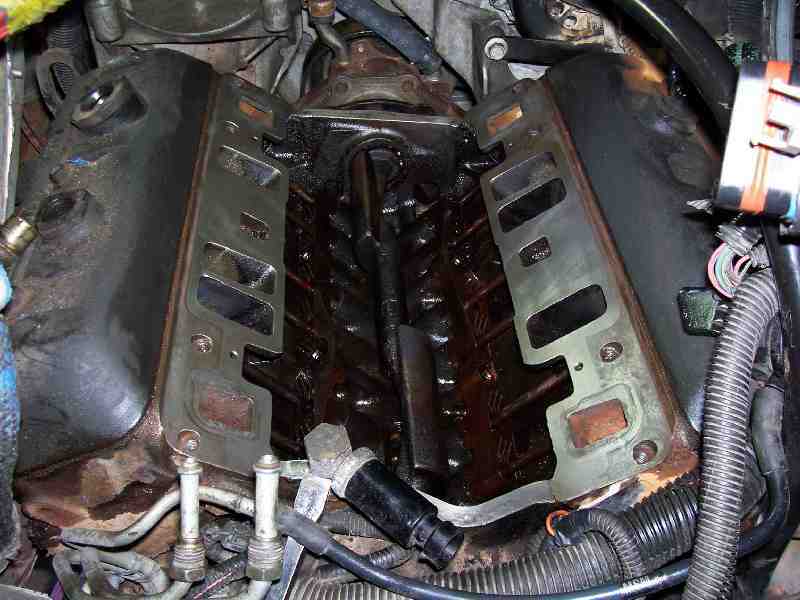 The void in the pattern at the bottom of the intake flange shows the leakage area: 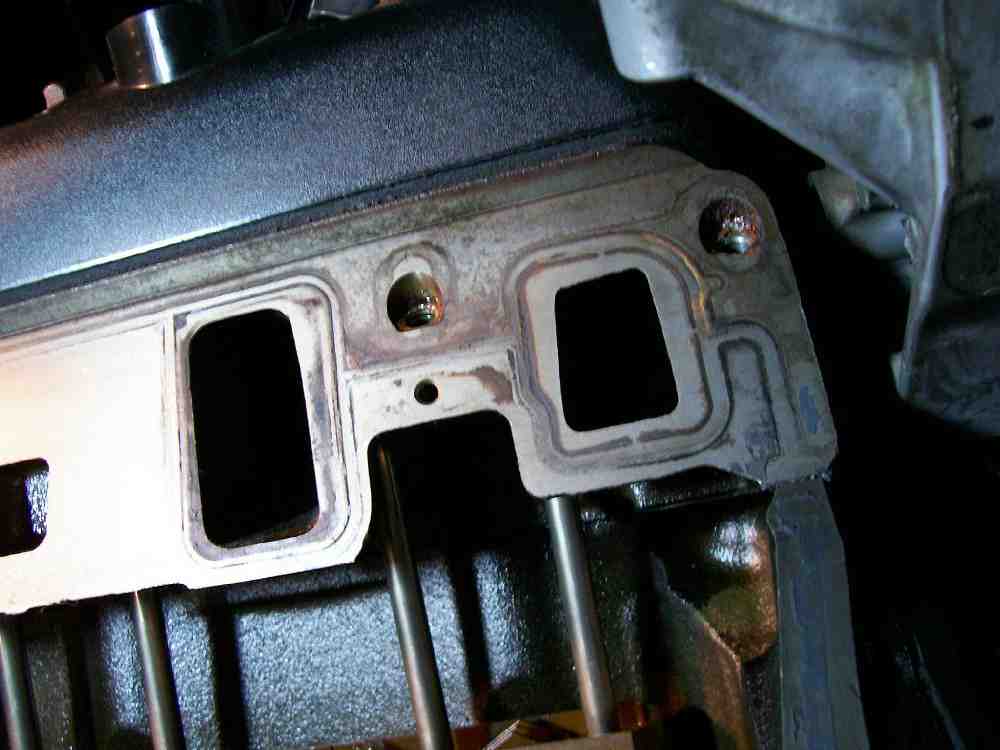 A cooling system pressure test with both a hot and cold engine can help reveal these leaks. Look for trails of coolant around the ends of the intake and along the bottom sides of the heads, where they join the block deck. These can have the appearance of head gasket leaks, but can be caused by intake leaks alone. The heads on these engines are fairly stable, and seldom suffer gasket failures unless they are severely overheated.
__________________
Permanent seat assignment on the Group W bench... Automotive Forums Survival Guide Last edited by Blue Bowtie; 08-21-2011 at 12:05 PM.
|
|
 |
POST REPLY TO THIS THREAD |
 |
|
|






