Hello again,
I've left it a couple of weeks before updating - I wanted to have something worthwhile to show! I've been busy working on the inlet stacks and the intercooler structure, and it's all slowly coming together. The starting point was making the cores for the inlets - 18mm lengths of 9/32" tube, with a band of 1mm x 0.5mm strip wrapped around each end. Slices of 3mm half-round were added to create the flange detailing, using a simple fixture to keep them aligned properly:
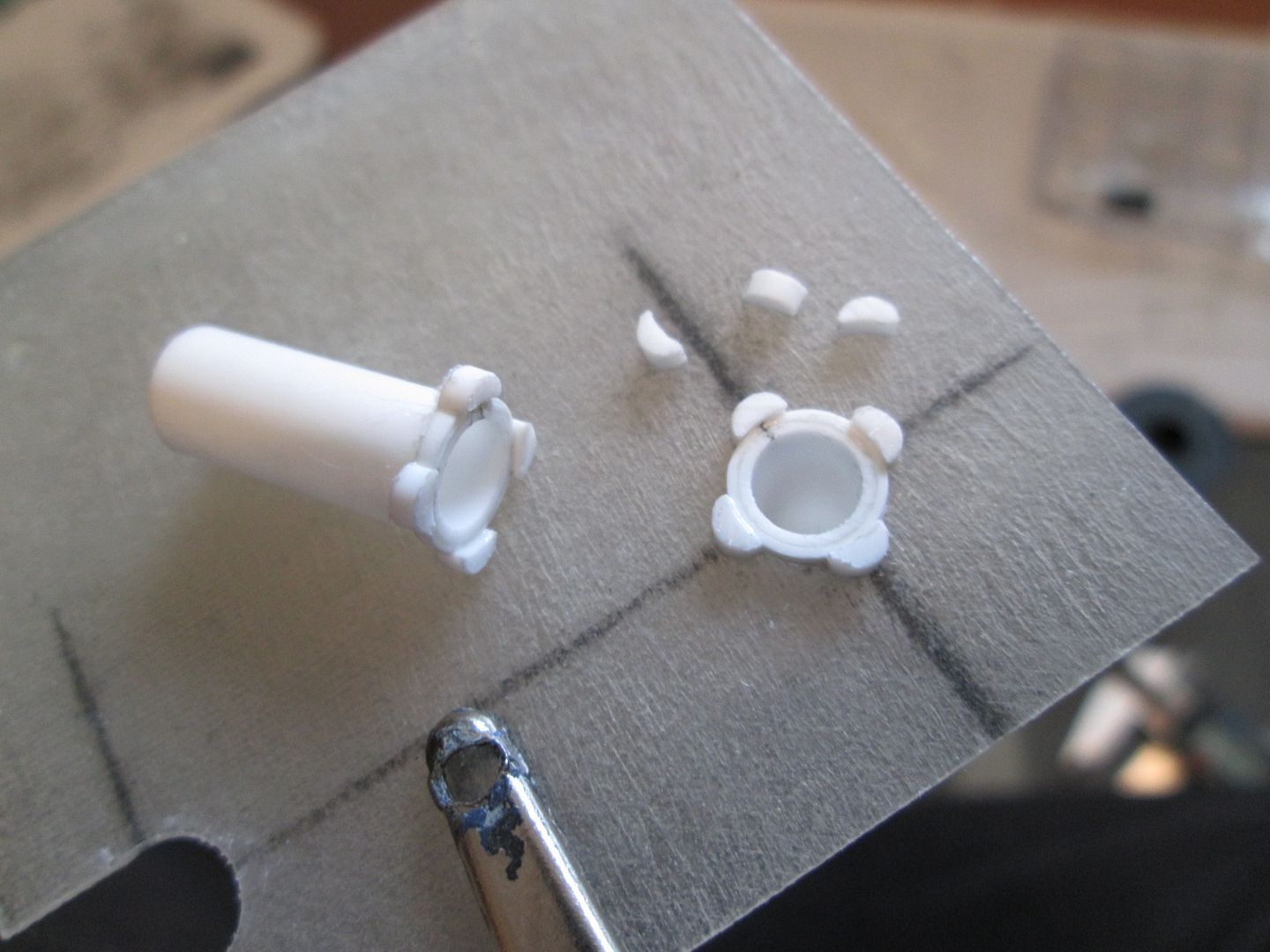
Make one, then make five more! The half-round pieces were filed smooth on each end to bring the length back to 18mm overall. Each stack sits on a short stub which is part of the head casting - I've pinned all these together with smaller sections of tube inside to keep everything in place:
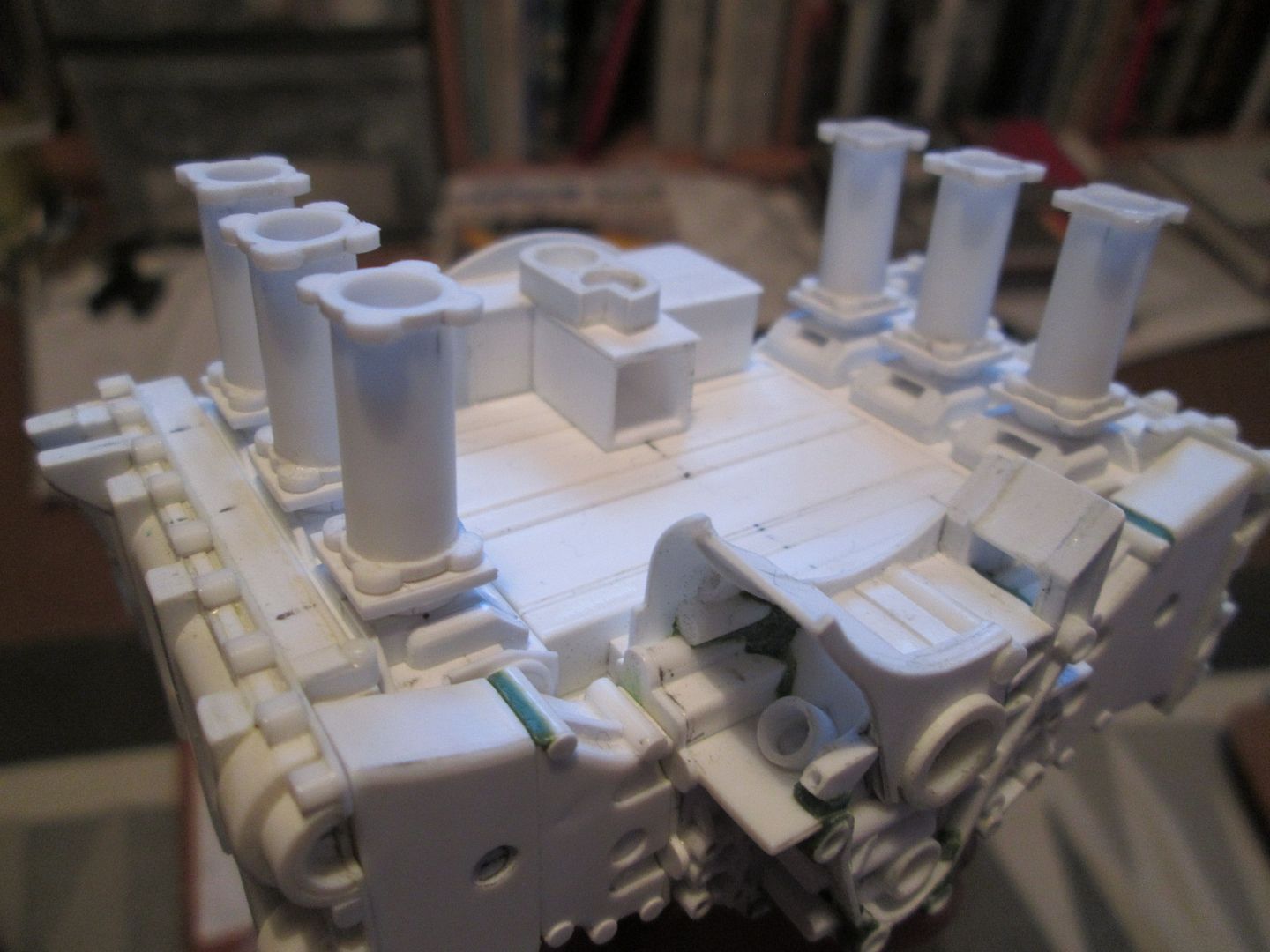
In time the square flanges at the bottom will be fettled into shape. Next job was to create the two intercooler bodies that sit on top of the inlet stacks - I had to play around with the box-section for a while to get a suitable combination. It's worth remembering that most of these measurements have come from comparing several photos of the engine and scaling from each one - as long as it all fits in place, that's fine!
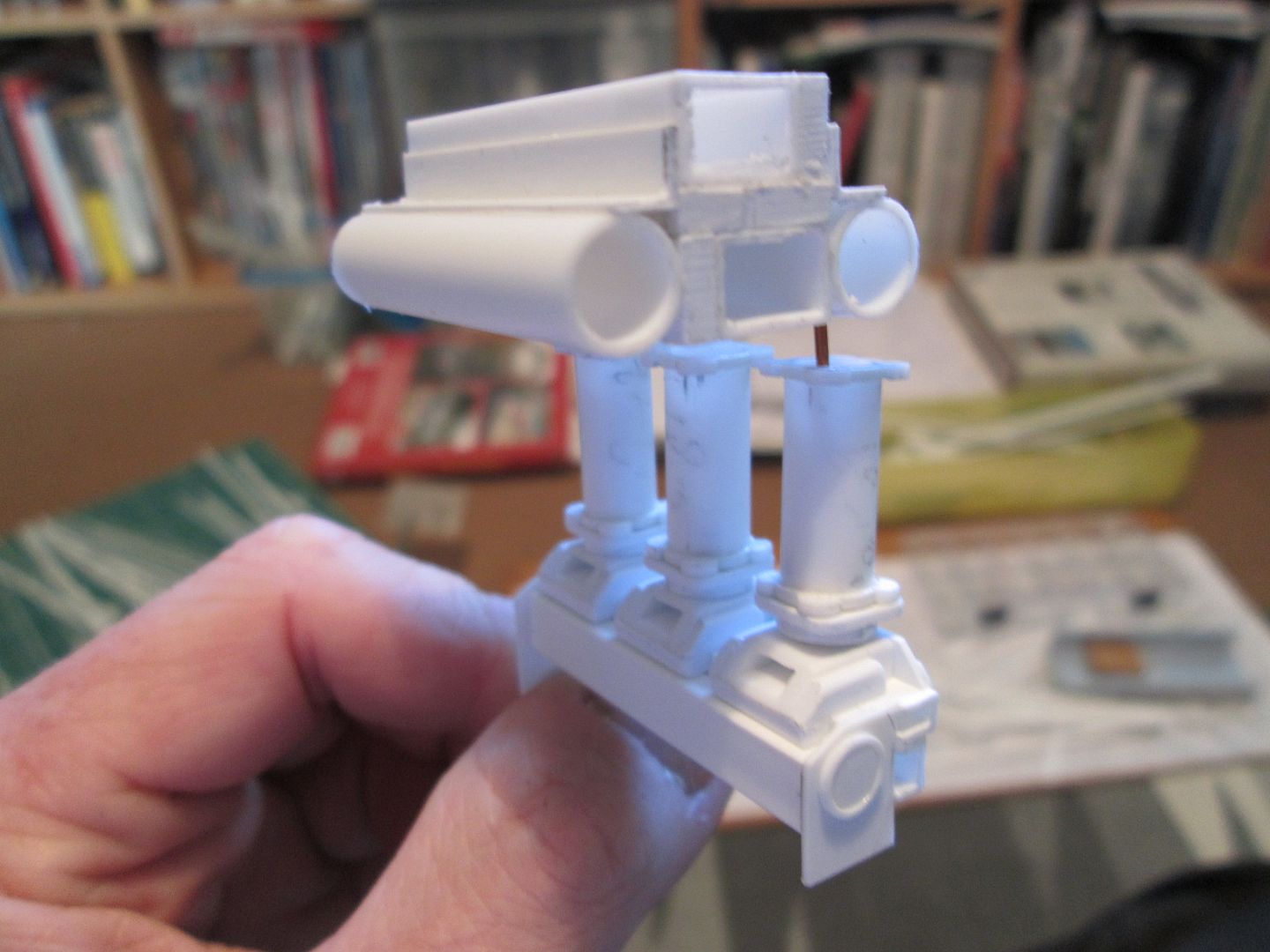
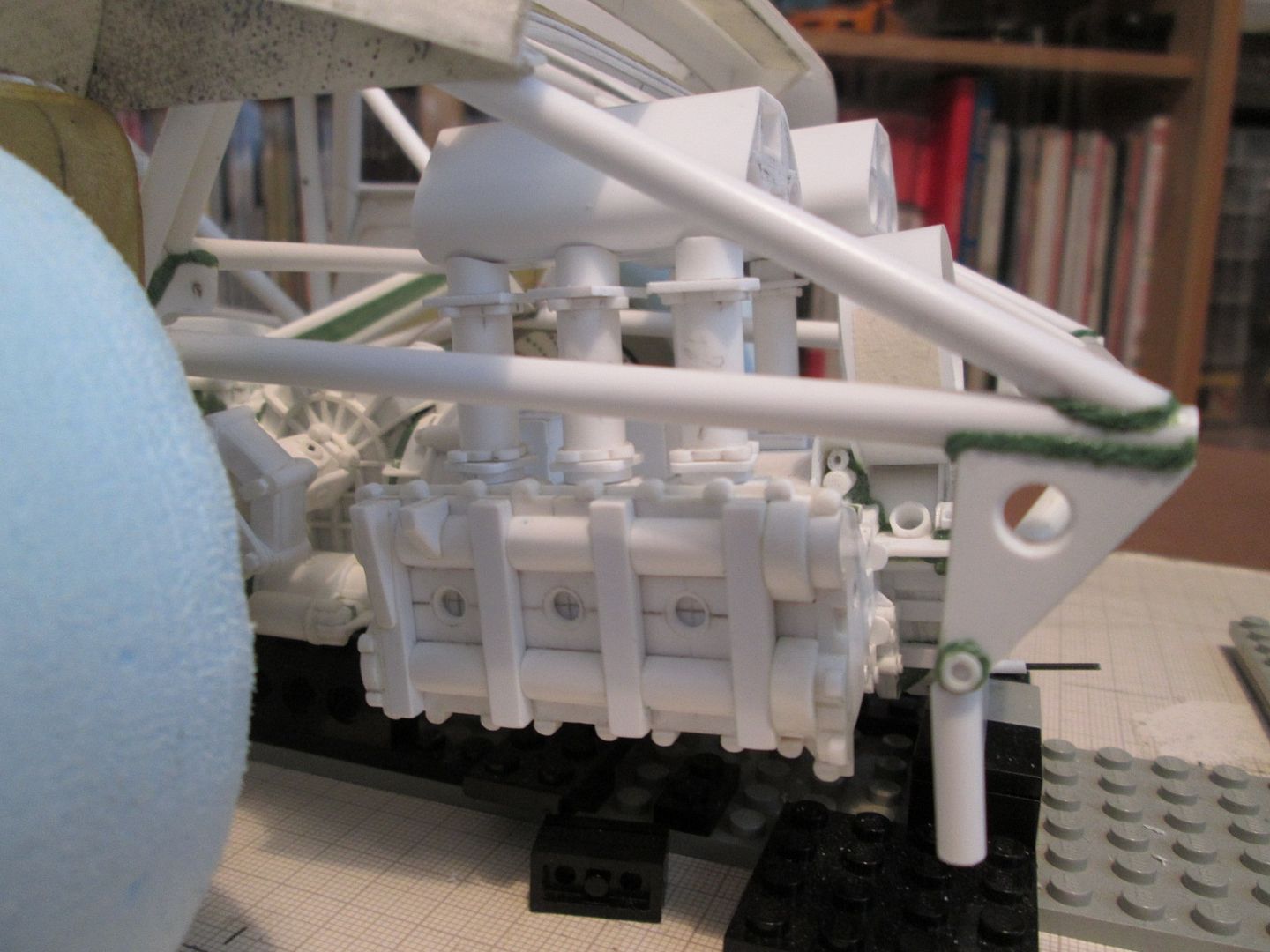
The centre section of each intercooler was given a wrapped layer of 0.4mm sheet - I added some reinforcement under the sloped sides to hold it's shape. The real things appear to have a very fine almost 'crackle' type finish - I think some experiments with textured paint may be in order eventually? You can see here how everything fits under the bodywork:
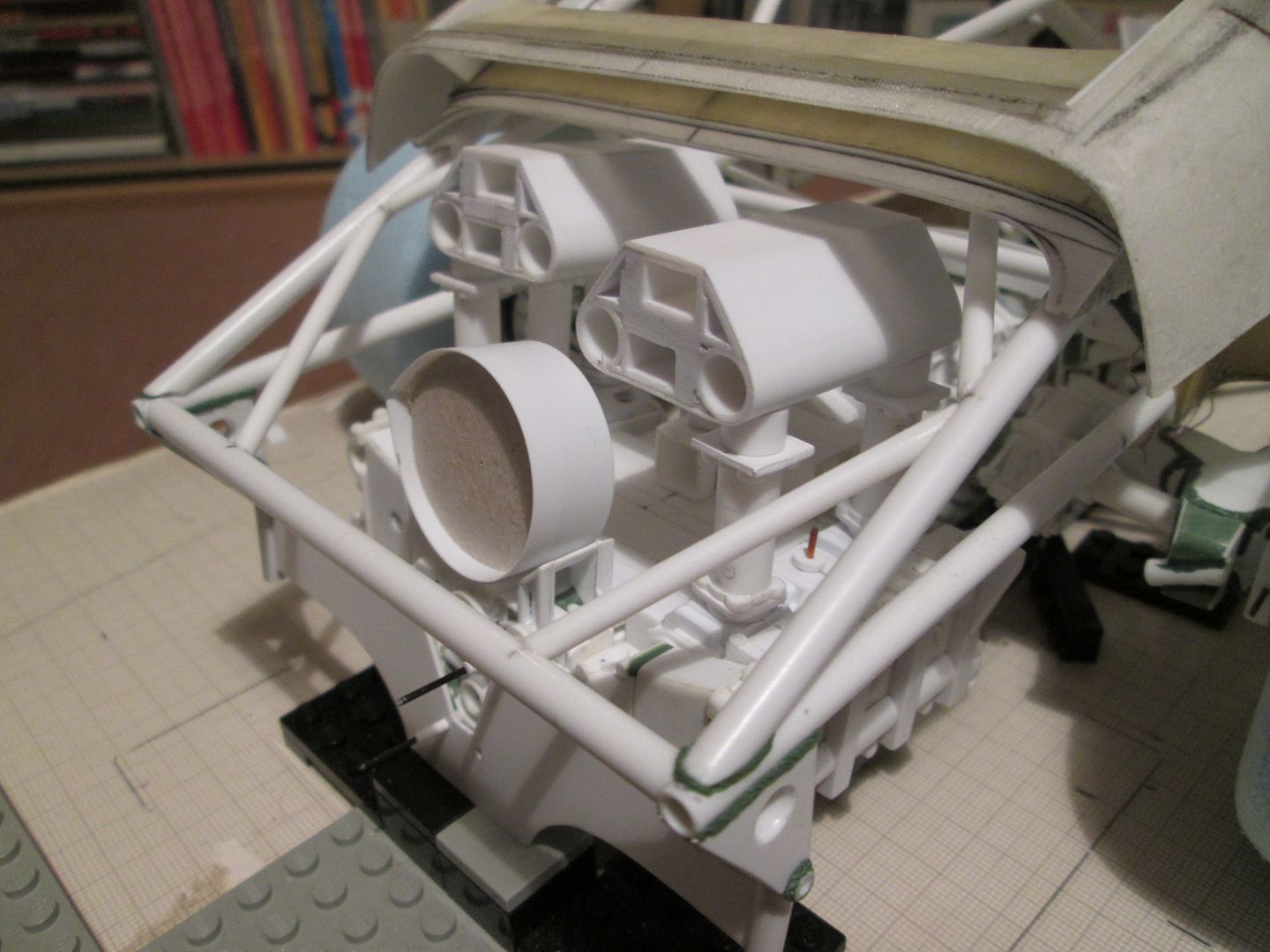
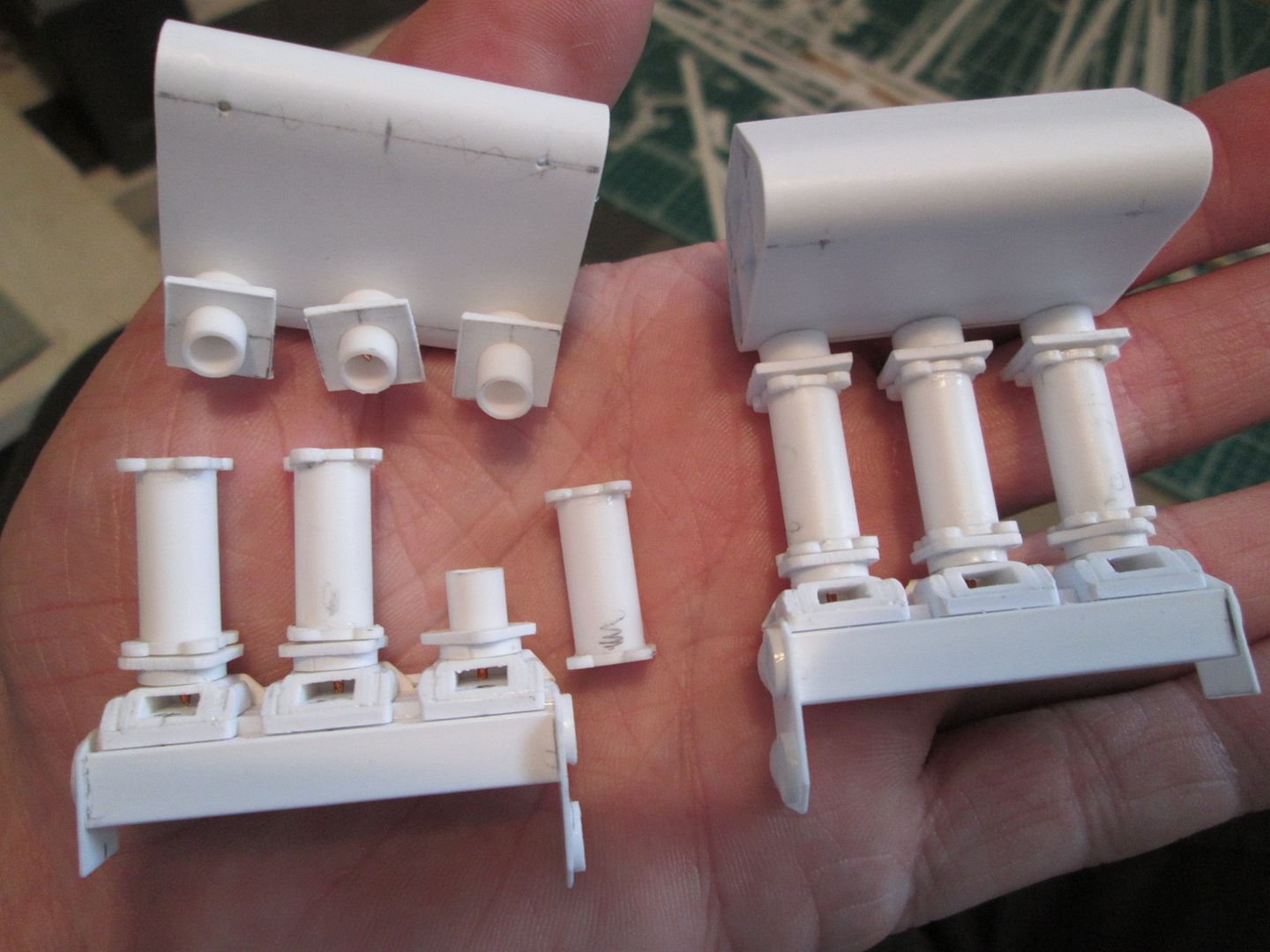
Here you can see how everything comes apart and spigots together:
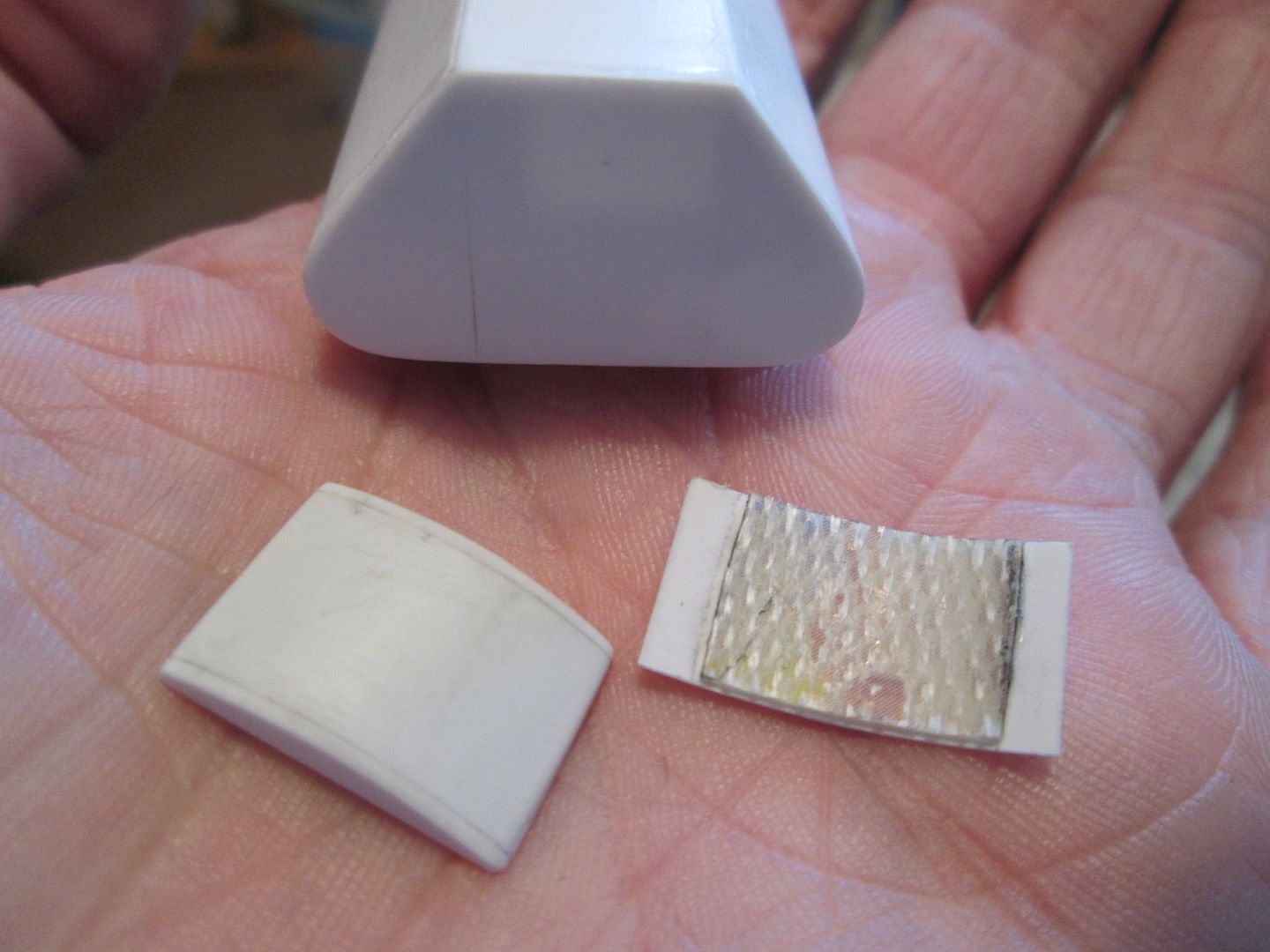
The ends of the intercoolers were blanked off easily enough, but I also had to add two shallow curved end-tanks. I re-cycled some offcuts of old curved fibreglass to provide a backing layer, added an outer styrene skin, then a pair of sides to finish it off:
The forward ends of the intercoolers will have simpler square end tanks where the pipework will connect, but these will wait for another time.
The final job for this update was to add some detailing to the inlet stacks. Similar castings were used on the 1978 935 and 936 engines, and also on the 956 and 962 engines, so there are plenty of photos to work with - the trick is working out which bits are appropriate for the Moby Dick. It's clear from the photos that they certainly tried at least two variations for the intercooler layout, but there also appears to be small differences in things like the positioning of the fuel injector pipes. The engine in the Freisinger car is subtly different again in other ways...
Here I've added some waisted plates to the front and back of each inlet, plus some 1/8" tubes for the fuel lines to connect to, and the connecting sections between the three cylinders (part of the throttle mechanism):
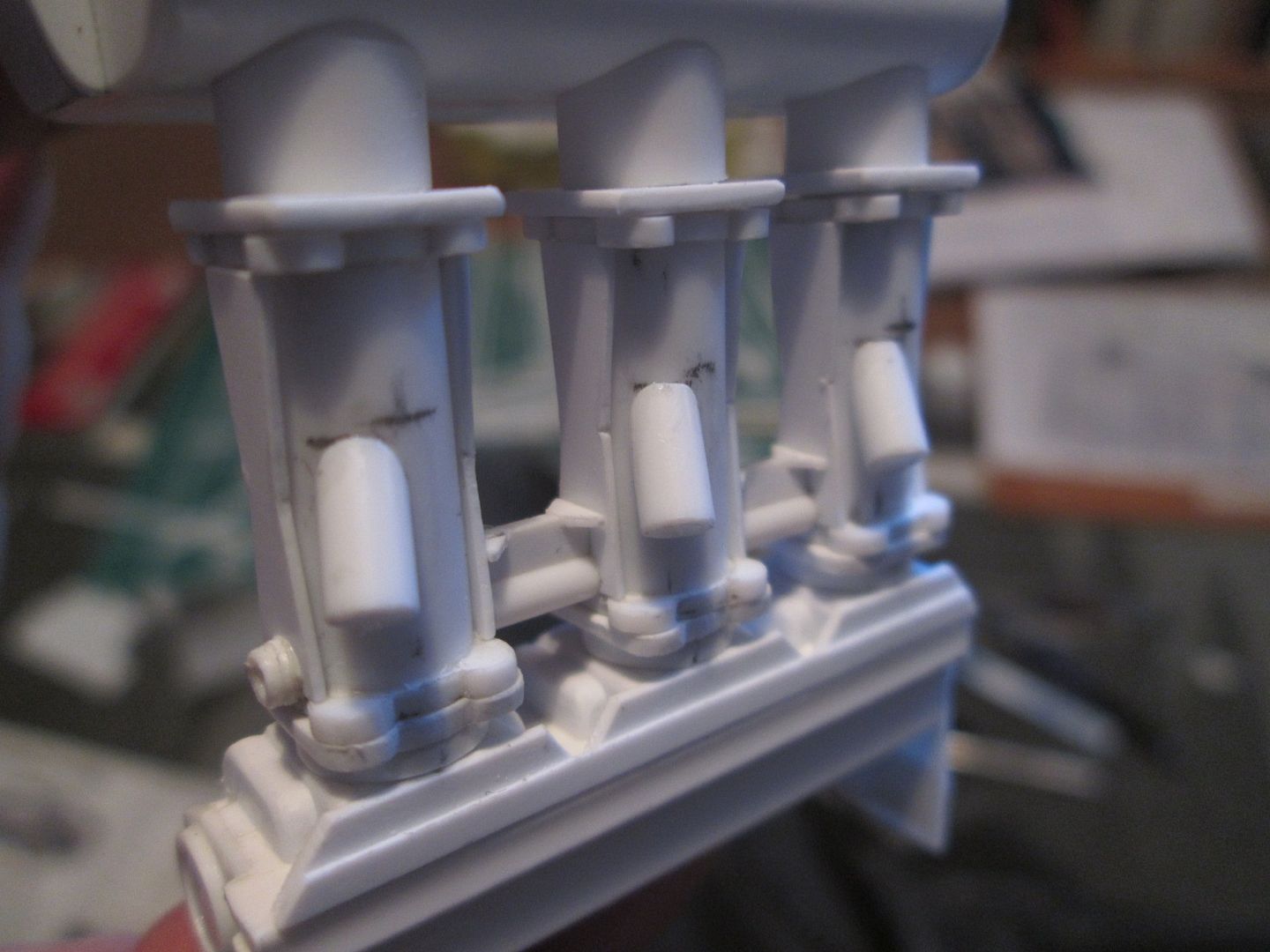
I've also done some work on shaping the lower flange that each inlet sits on - the top flanges attached to the intercooler are supposed to be square. In this final photo you can see where I've added four small wedges to each inlet - these measure 5.5mm long, 0.5mm thick, tapering off from 1mm. There are also four more on the other side...not the easiest of things to cut! They'll need a little tidying up now they're in place, but the final effect will look good - not that you'll see too much of them when it's all assembled.
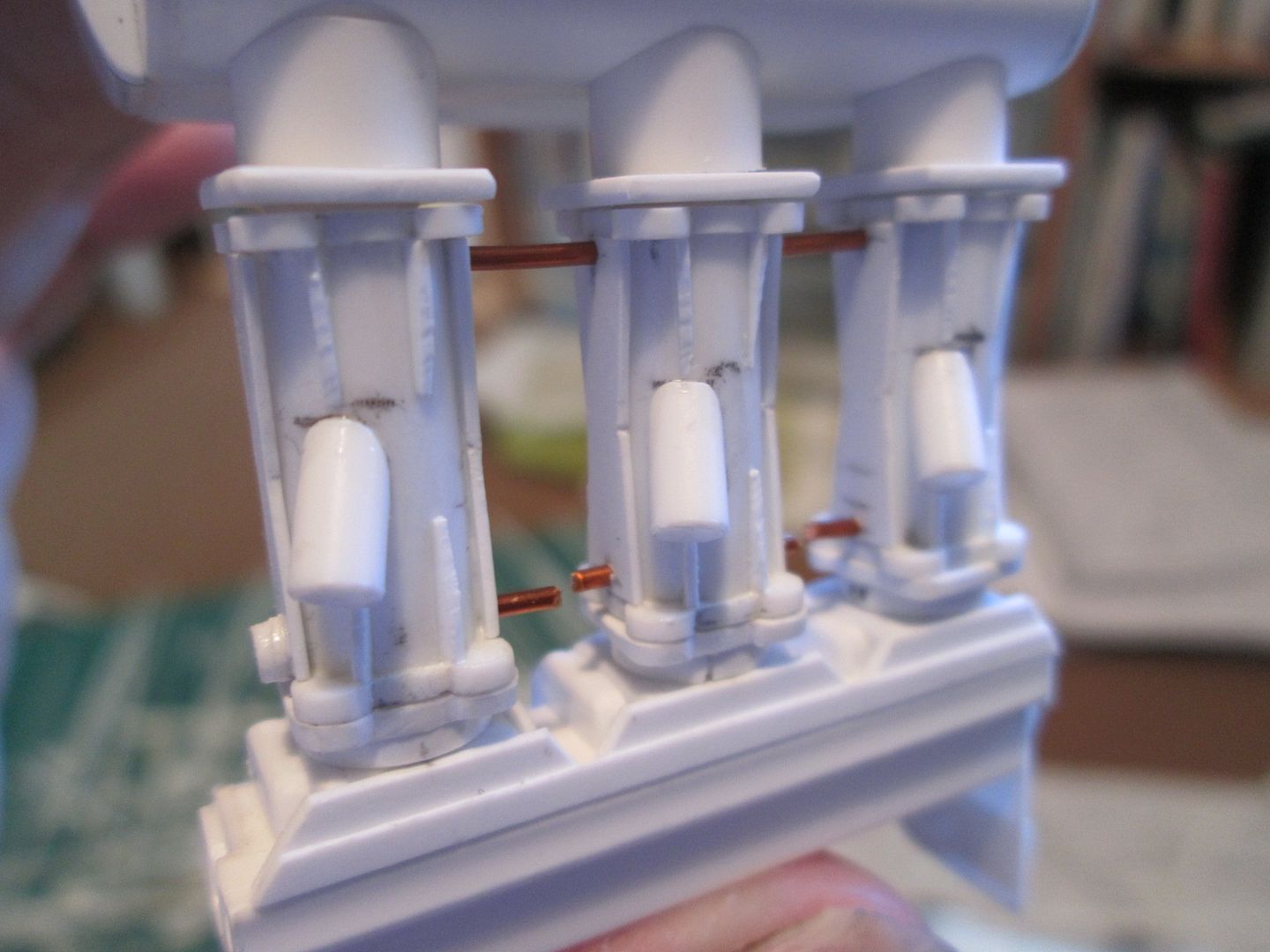
The rod through the top of the stacks will be the eventual position of the throttle mechanism - this will be added later. I've now got to finish working on the parts for the second set of inlets to bring them all to the same level before starting the next job. I'm tempted to get the fan and shroud sorted out - once this is done the engine would surprisingly complete, plus it would make it easier to create the fuel injection pump, throttle mechanism, etc.
So, that's it for tonight. I'll continue with the inlets and see what happens...
Cheers!
SB